Arch Support Insoles Explained | A Podiatrist's Guide
by Dr. Tom Lembo | 6 min read
This article was written by a podiatrist and the creator of Samurai Insoles, a product developed to provide arch support. While we make Samurai Insoles, this article reflects our professional medical experience and review of over the counter arch supports.
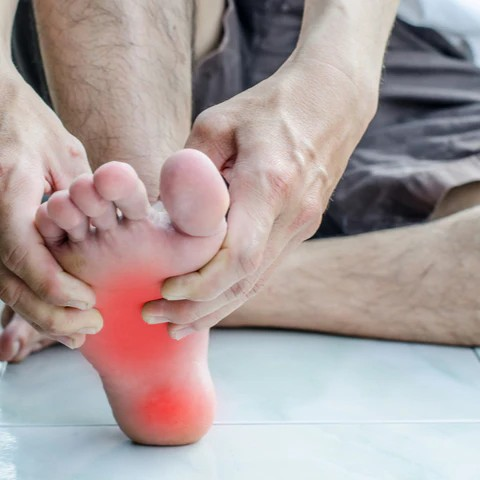
Arch Support Insoles – What Actually Helps and Why
Most people think arch support is about that feeling of marshmallow-like cushiony comfort.
It is not!
It is about controlling motion in a comfortable way.
Your arch is designed to flatten slightly when you walk. That is normal. The problems begin when it flattens too much or too quickly. When that happens, tissues like the plantar fascia and posterior tibial tendon are placed under repeated painful strain.
That strain adds up (quicker than you might think).
Cushioning can feel good in the short term.
But control reduces repetitve stress.
That difference matters more than most people realize.
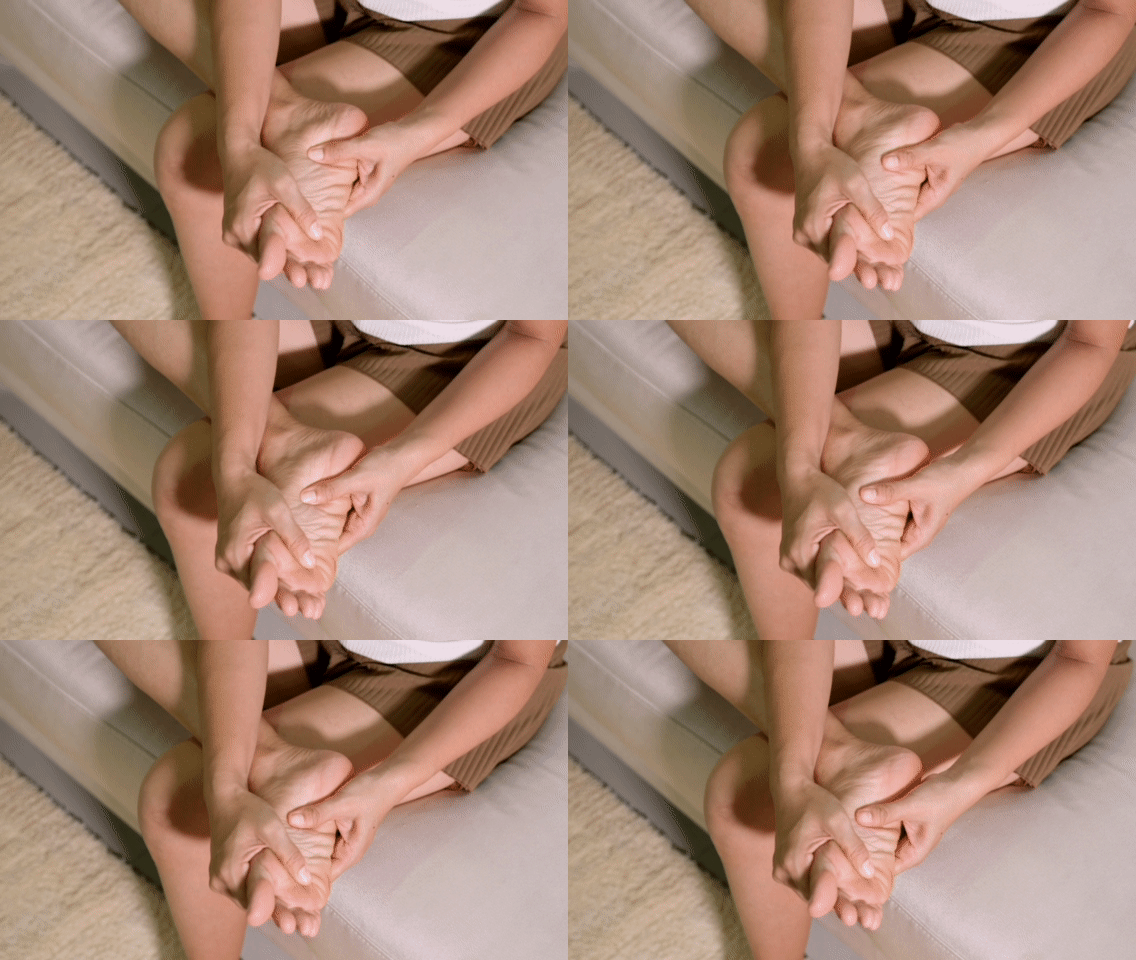
What Happens When the Arch Collapses?
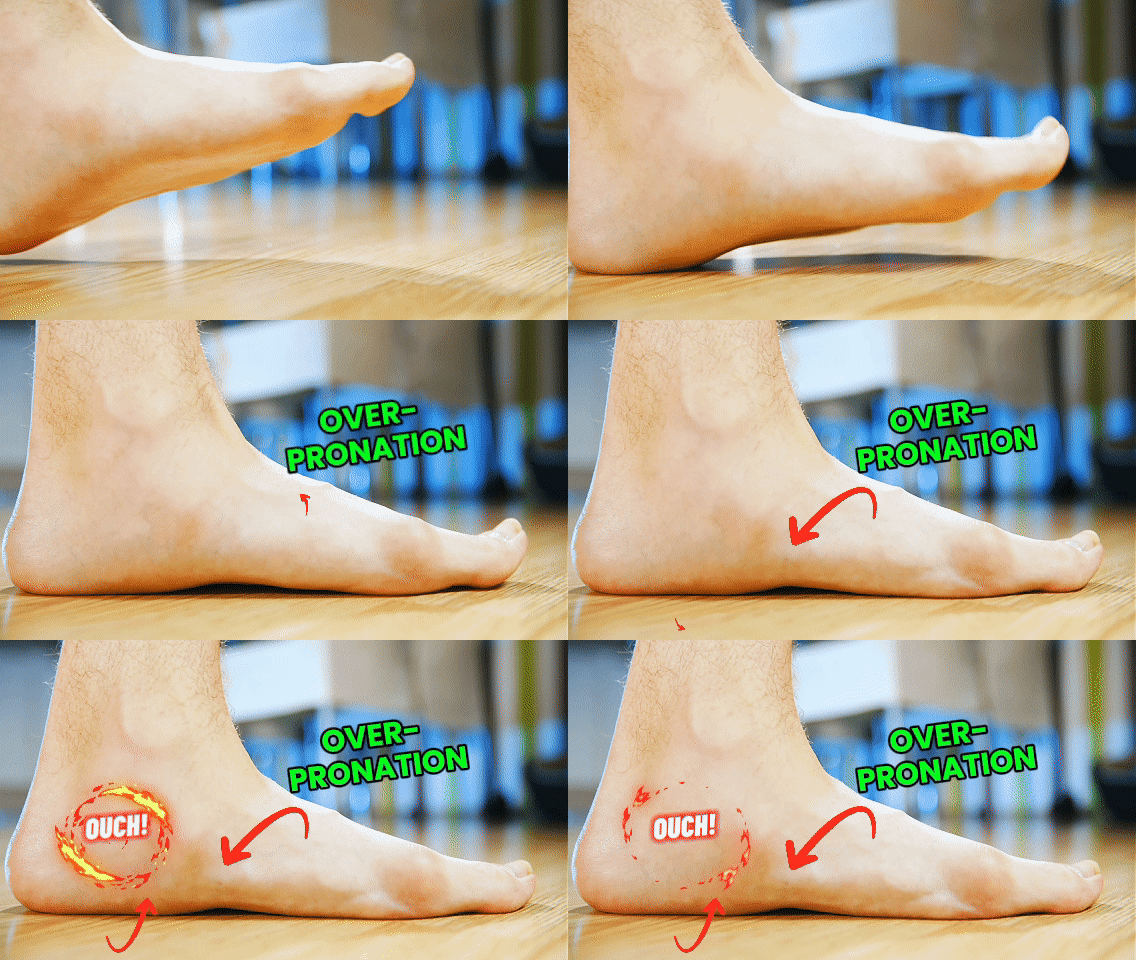
When repetitive excessive flattening occurs (also known as overpronation):
• The heel rolls inward
• The arch elongates under load
• The plantar fascia is tensioned repeatedly
• The foot and lower leg muscles work harder to stabilize (this is exhausting for them)
Over time, this can contribute to:
• Heel pain
• Arch fatigue
• Shin splints
• Knee discomfort
Support is not about forcing the arch upward!
It is about slowing and guiding the excess foot flattening motion that can cause so many painful conditions down the road.
Why Many “Supportive” Solutions Fall Short
There are two common problems I see in practice.
First, very soft inserts. They feel supportive when you press on them with your hand. Under full body weight, most foam compresses and loses structure. These are designed to feel nice right out of the package. But after a few days most people are back where they started, because the core problem hasn't been addressed.
Second, built in shoe support. Many shoes include mild contouring. But that contouring sits inside foam midsoles that break down over time. Once the foam softens, control decreases. This can happen quickly, and once again, put you back at square one.
Arch support needs to resist load.
Structure matters more than softness.
What to Look For in an Arch Support Insert
If you are comparing arch support options, focus on four things:
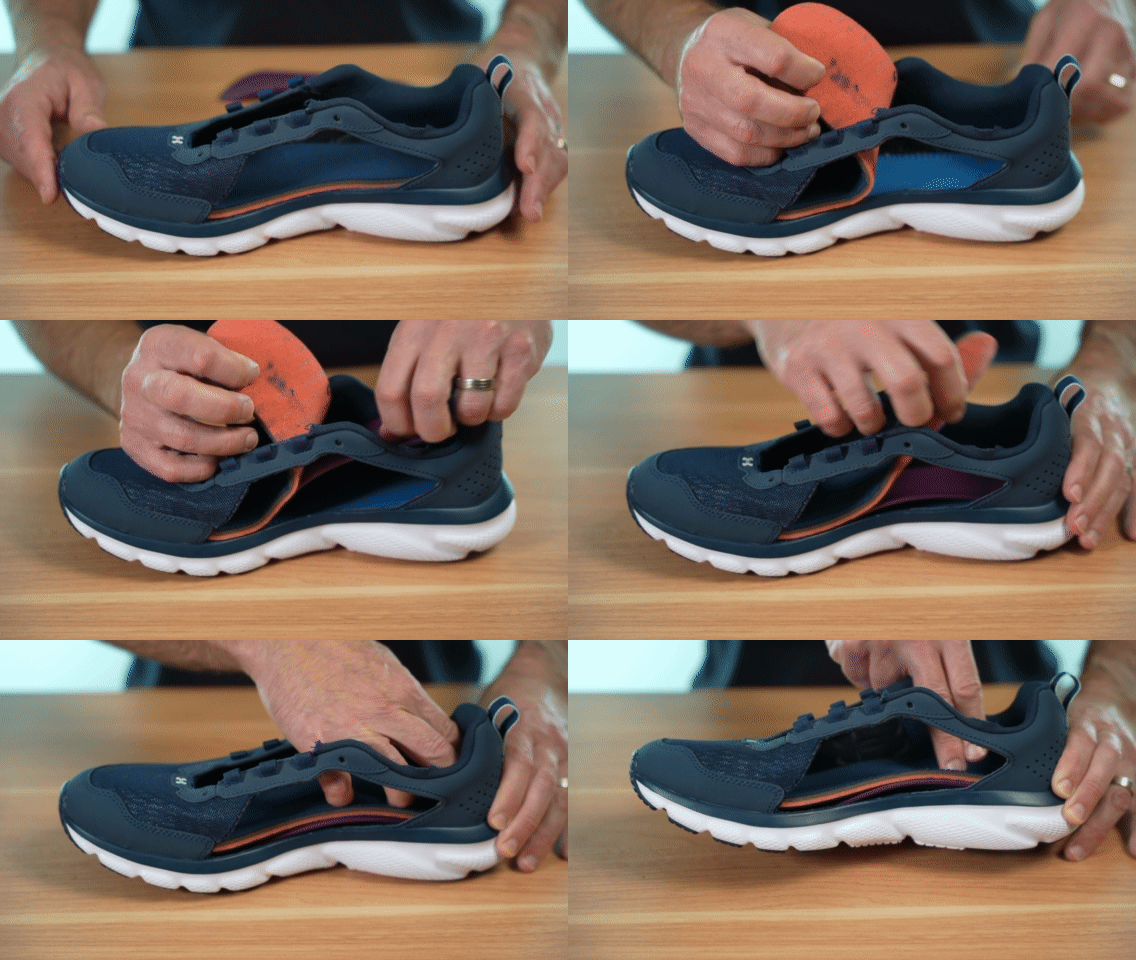
• Firm material that holds its shape under body weight
• A defined arch contour
• Low profile design that fits under your existing insole
• Stability without crowding your shoe
Very soft foam often provides extremely short term comfort.
It rarely provides enough control to get the job done long term.
What Not To Do When Choosing Arch Support
Before you invest in another pair of inserts, avoid these common mistakes:
• Do not assume softer is better. Soft foam may feel comfortable at first but often compresses under full body weight.
• Do not rely on shoe labels alone. Many shoes marketed as supportive use foam that breaks down over time.
• Do not size up your shoes to “make room” for bulky inserts. Proper support should fit cleanly without distorting shoe fit.
• Do not expect immediate perfection. Some mild adjustment time is normal as your foot adapts to improved mechanics.
• Do not chase extreme arch height. More aggressive is not always better. The goal is controlled motion, not forced elevation.
Our Top 5 Arch Support Inserts for 2026
When it comes to controlling overpronation, not every orthotic arch support insert is created equal.
Some focus on soft cushioning, others try to mimic custom orthotics - but few actually correct the motion that causes pain.
Here’s a closer look at five options that stand out for comfort, design, and value — including the one we recommend most for real, lasting relief.
🏆Our 2026 Top Pick🏆
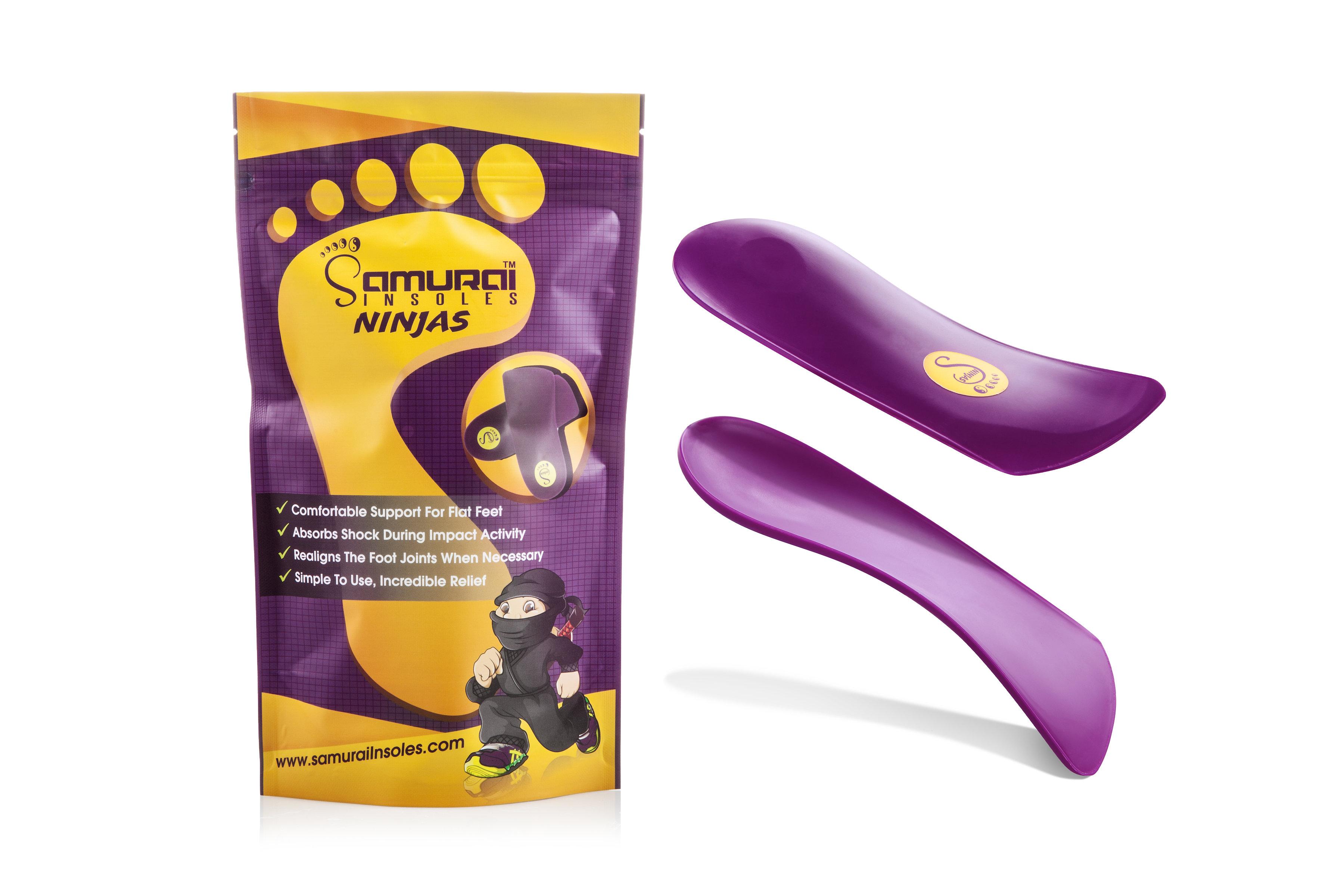
#1- Samurai Insoles Ninjas ⭐⭐⭐⭐⭐
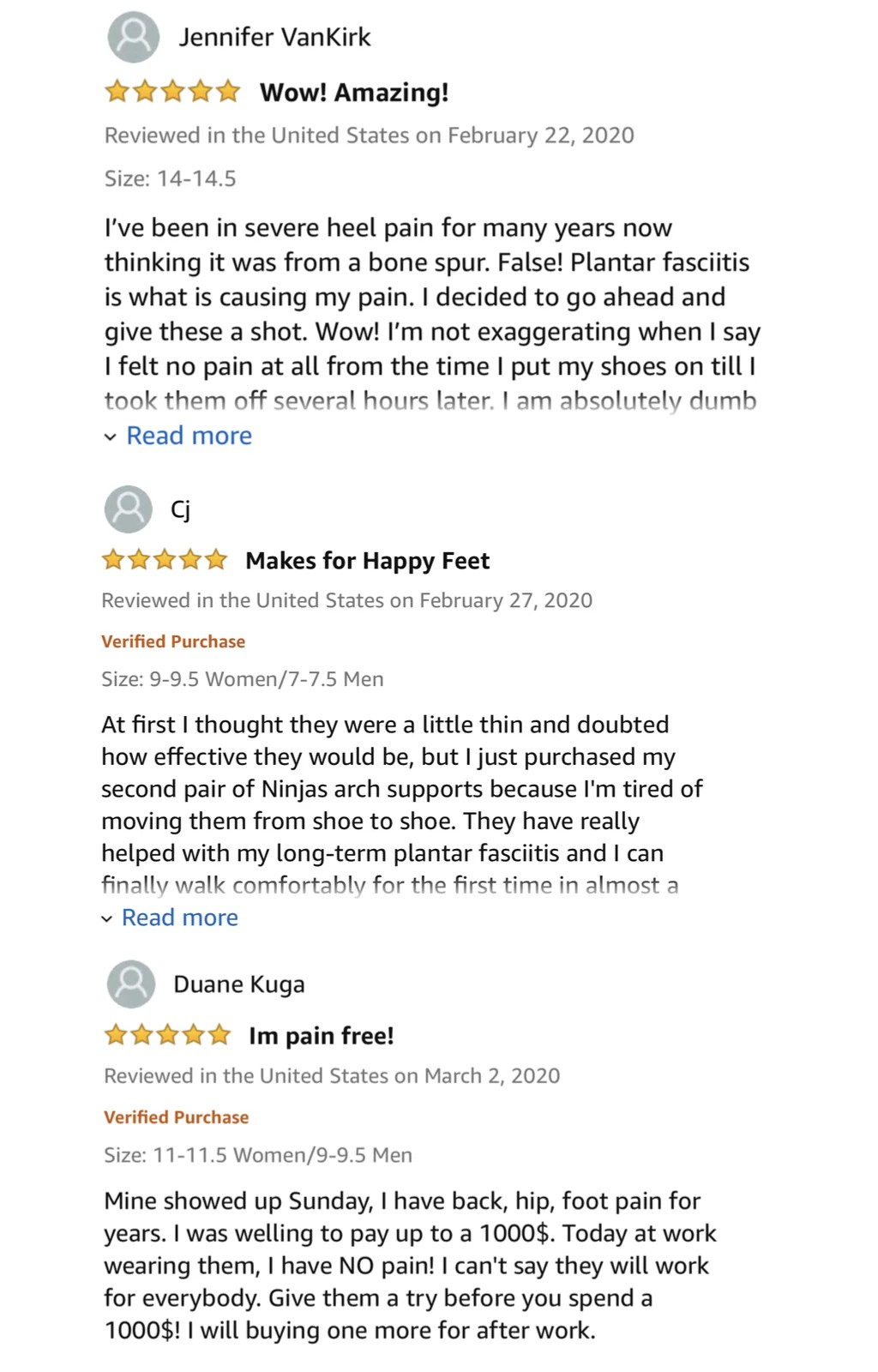
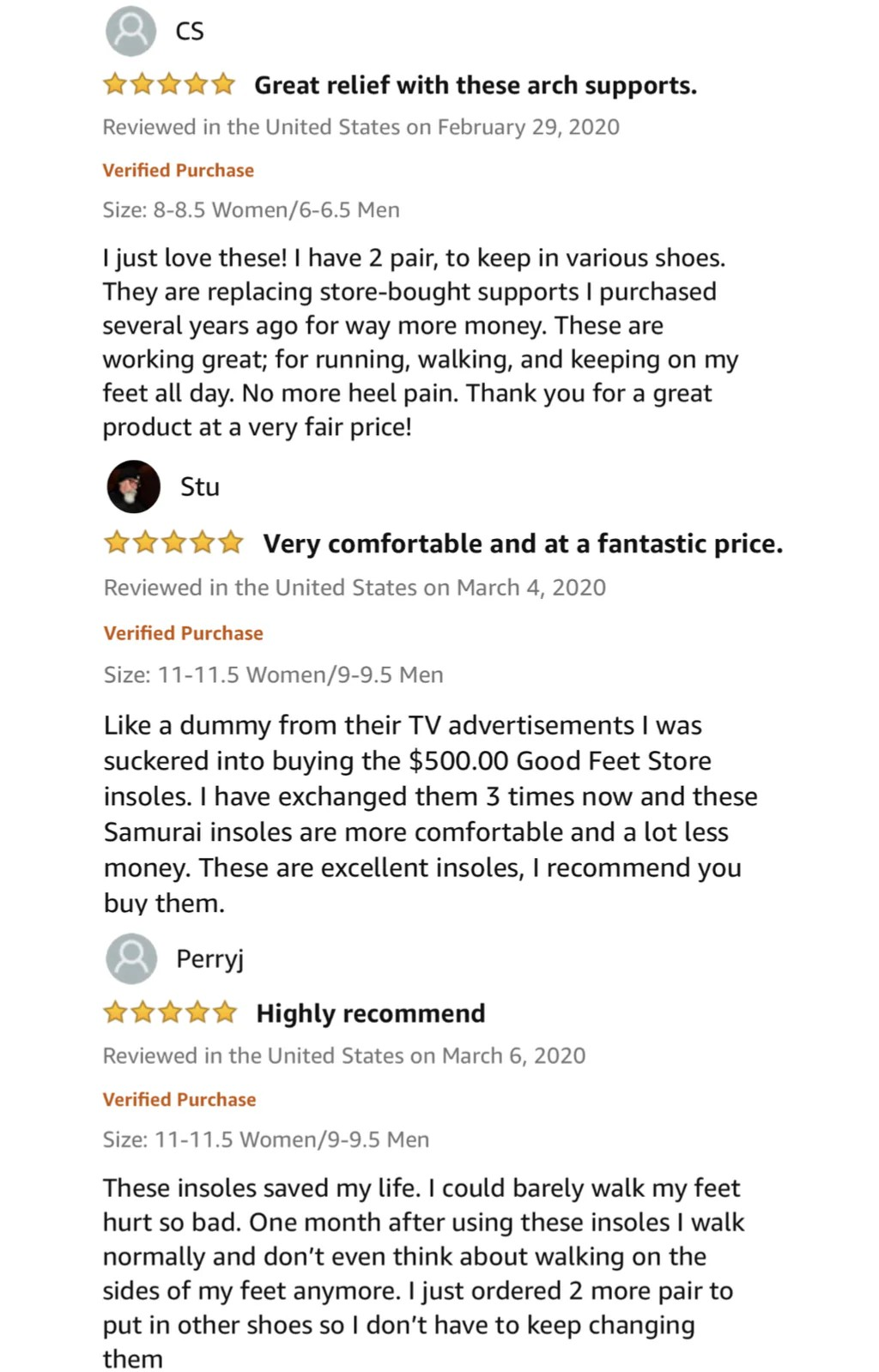
Podiatrist designed and made by an orthotic lab in the United States, Ninjas are one of the few arch support inserts that combine true orthotic structure with everyday comfort.
Instead of relying on soft foam or gel, Ninjas comfortably support your arch and stabilize your heel. The result? You move naturally again -without the sharp heel and arch pain that comes from overpronation.
I originally designed Samurai Insoles Ninjas after years of treating patients with plantar fasciitis who couldn’t find inserts that actually corrected the problem. Most insoles felt soft but didn’t support the arch properly, so I built one that did.
Why we recommend them:
✔️ Support that actually treats the cause, not just the symptoms
✔️ Comfortable enough for daily wear in most shoes
✔️ Durable construction — nothing to compress or wear out
✔️ 60-day comfort guarantee + 1-year warranty
✔️ Made in the USA by a professional orthotic lab
✔️ Price: Less than $40 - fraction of the cost of custom orthotics or many competing alternatives
Verdict: Real correction, real comfort, real results.
Relief to your door in 24 hours for most Prime Members!
No Prime? No Problem!
Free US shipping and returns
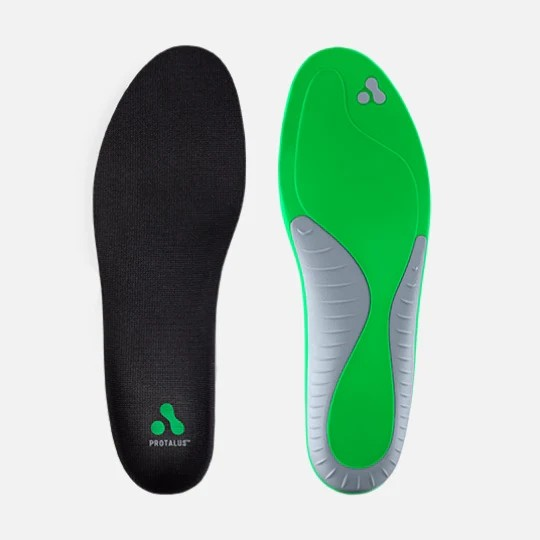
#2- Protalus Insoles T-100 Elite
You’ve probably seen Protalus all over social media. They’ve become popular for their thick, supportive feel - and they do help some people with flat feet or mild overpronation.
That said, they’re bulkier and pricier than most everyday users need.
Highlights:
-
Some users find them bulky with less than adequate support
-
Hybrid design with a firm plastic base
-
May work well for wider or bulky shoes or heavy daily wear
-
Price: ~$64.95
-
90-day warranty
-
Made overseas
Verdict: Supportive and stylish, but at nearly double the price, they’re a splurge for most.
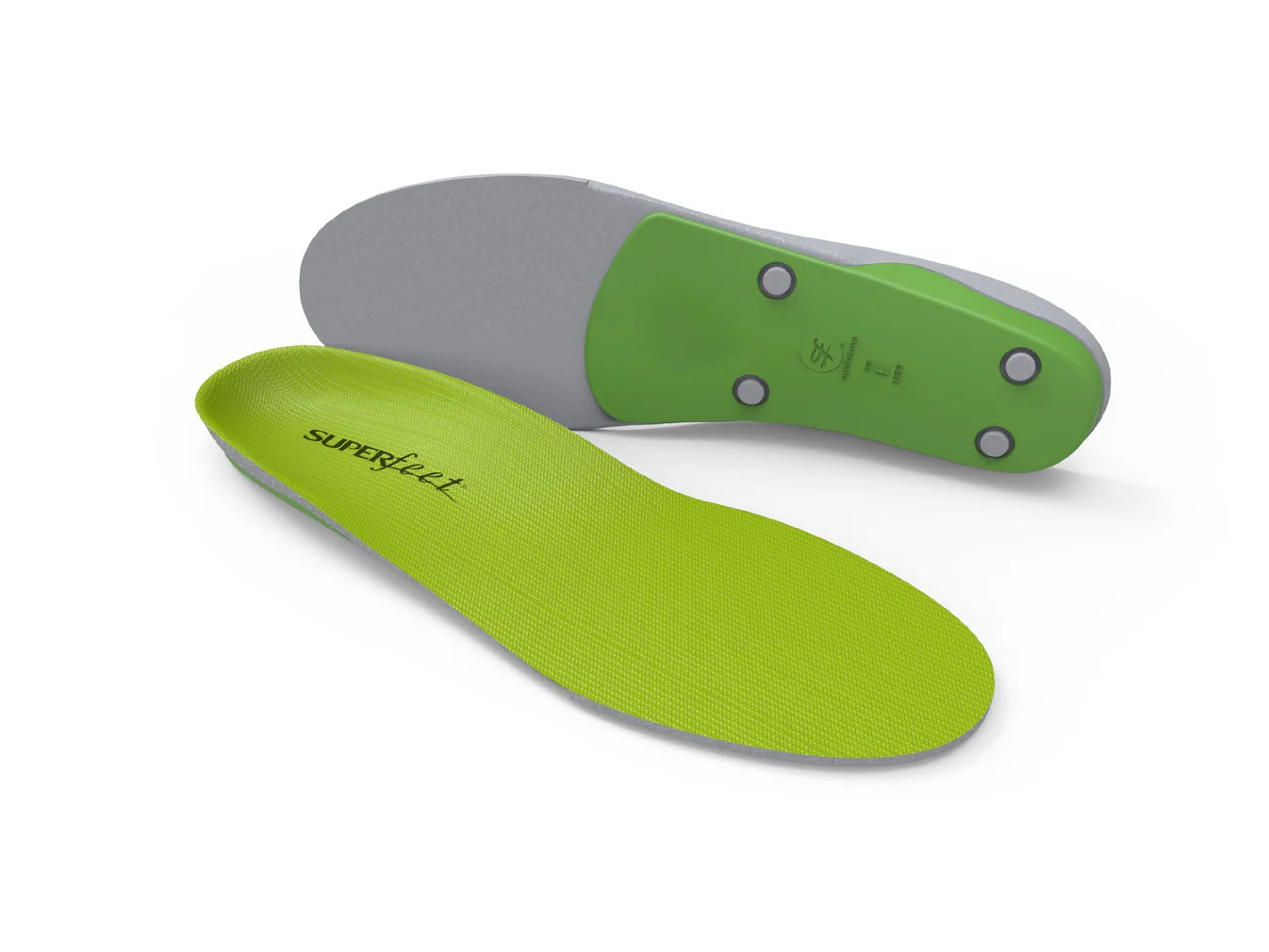
#3- Superfeet Green Insoles
A classic name in insoles - Superfeet helped pioneer modern arch support. Their Green model is firm, stable, and built to last.
However, the extremely rigid outer shell can make them feel much too stiff for casual wear, and they’re bulkier than most options here.
Highlights:
-
Strong, structured support, but often too stiff for many users.
-
Reliable for athletic and work shoes
-
Price: ~$54.95
-
60-day warranty
-
Made outside the USA
Verdict: Proven performance, but less comfortable for all-day wear.
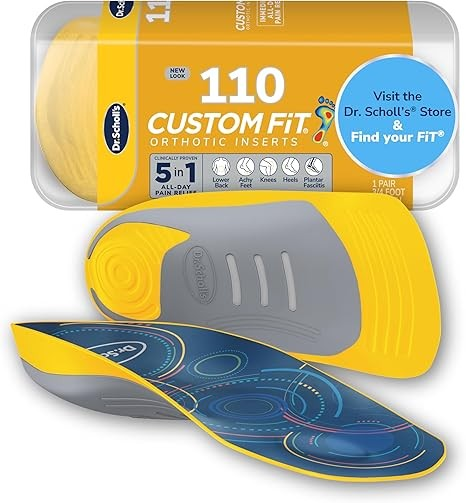
#4- Dr. Scholl's Custom Fit Orthotic Inserts
The “Custom Fit” line from Dr. Scholl’s sounds impressive, but the name oversells it a bit. These are comfortable enough, but they rely on a plastic bottom layer that flexes WAY too much (in our opinion). Also, because they sit on top of your shoe’s insole, they can feel bulky or unstable.
Some listings note they’re not returnable once opened, so check the seller’s current policy before you buy.
Highlights:
-
Widely available in stores, but potentially terrible return policy on Amazon
-
Shorter length may take getting used to and can lead to instability and shifting.
-
Price: ~$50.00
-
90-day warranty
-
Made outside the USA
Verdict: Convenient and easy to find, but limited support and return options for the price.
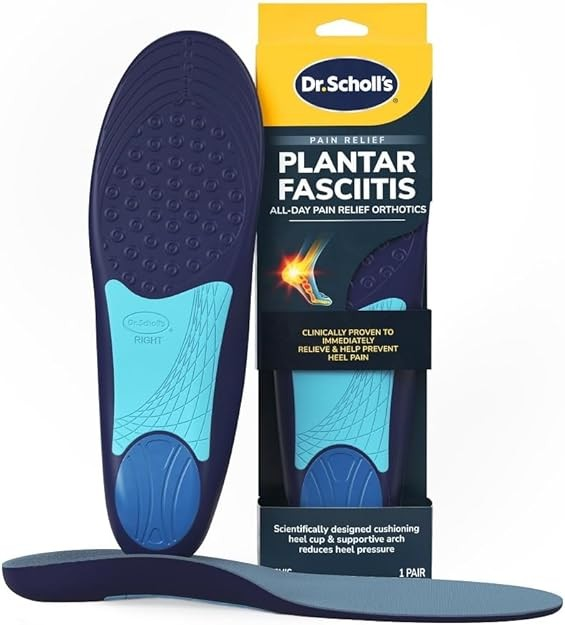
#5- Dr. Scholl's Plantar Fasciitis Orthotics
The most affordable insert on this list, and probably the one you’ve seen at every drugstore.
They’re light and cushiony, but that’s about where the benefits stop.
Highlights:
-
Good short-term comfort, extremely poor long-term support for many
-
Price: ~$15.00
-
Thin design fits most shoes easily
-
90-day warranty
-
Made outside the USA
Verdict: Budget-friendly but ultimately may not have adequate support to relieve or prevent plantar fasciitis for some users.
Final Takeaway
If you’re serious about controlling overpronation, don’t settle for an insert that only feels soft — look for one that supports proper motion.
Samurai Insoles Ninjas combine medical-grade structure, everyday comfort, and real affordability. They’re built to relieve pain today and prevent it from coming back tomorrow.
Frequently Asked Questions
Do arch supports really work?
They can, when excessive arch collapse is part of the problem. By limiting inward rolling and reducing strain on soft tissues, structured support can improve symptoms in many people.
How do I know if I need arch support?
Common signs include heel pain in the morning, arch fatigue after standing, visible inward rolling of the ankle, or recurring shin discomfort. If motion overload is contributing, improving support may help.
Are soft gel inserts good enough?
Soft inserts may feel comfortable, but they often compress under full body weight. If your goal is motion control, a firmer structural insert is usually more effective.
Do I need custom orthotics?
Not always. Many people respond well to well designed over the counter structural inserts. Custom devices are typically reserved for complex or persistent cases.
How long does it take to feel a difference?
Some people notice improvement within days. Others need a short adjustment period as the foot adapts to improved mechanics.
Can arch supports help plantar fasciitis?
If excessive arch collapse is increasing strain on the plantar fascia, improving structural support may reduce repetitive stress and irritation.
Can arch supports help with flat feet?
Flat feet are not inherently a problem. They become problematic when motion is poorly controlled. Structured support can help guide motion more efficiently.

“I’ve treated thousands of cases of severe plantar fasciitis that came back again and again until we addressed the real cause – overpronation. Once the arch is supported correctly, the fascia can finally heal.”
Best,
Dr. Tom Lembo
Samurai Insoles are branded products made by our company, Samurai Wellness, LLC, and we truly believe that our products are the best on the market! This article is a promotion of the Samurai Insoles branded products that we sell. It is important to know that our products are not intended to diagnose, treat, cure, or prevent any disease.