Foot Pain Isn’t Always About Where It Hurts
by Dr. Tom Lembo | 6 min read
This article was written by a podiatrist and the creator of Samurai Insoles. While we make Samurai Insoles, this article reflects our professional medical experience and review of various OTC arch supports.

The Way Your Foot Moves Might Matter More
Foot pain can happen almost anywhere. Some people feel it along the bottom of the foot or through the arch. Others notice discomfort in the ball of the foot, along the outside edge, or even across the top. The location can vary, but often, foot pain is less about where it hurts, and more about how the foot is functioning during standing, walking, or running.
When certain movement patterns (like overpronation) place repetitive strain on the foot, different structures and tissues can become irritated in different foot regions. So while the locations can be different, the cause can often be similar!
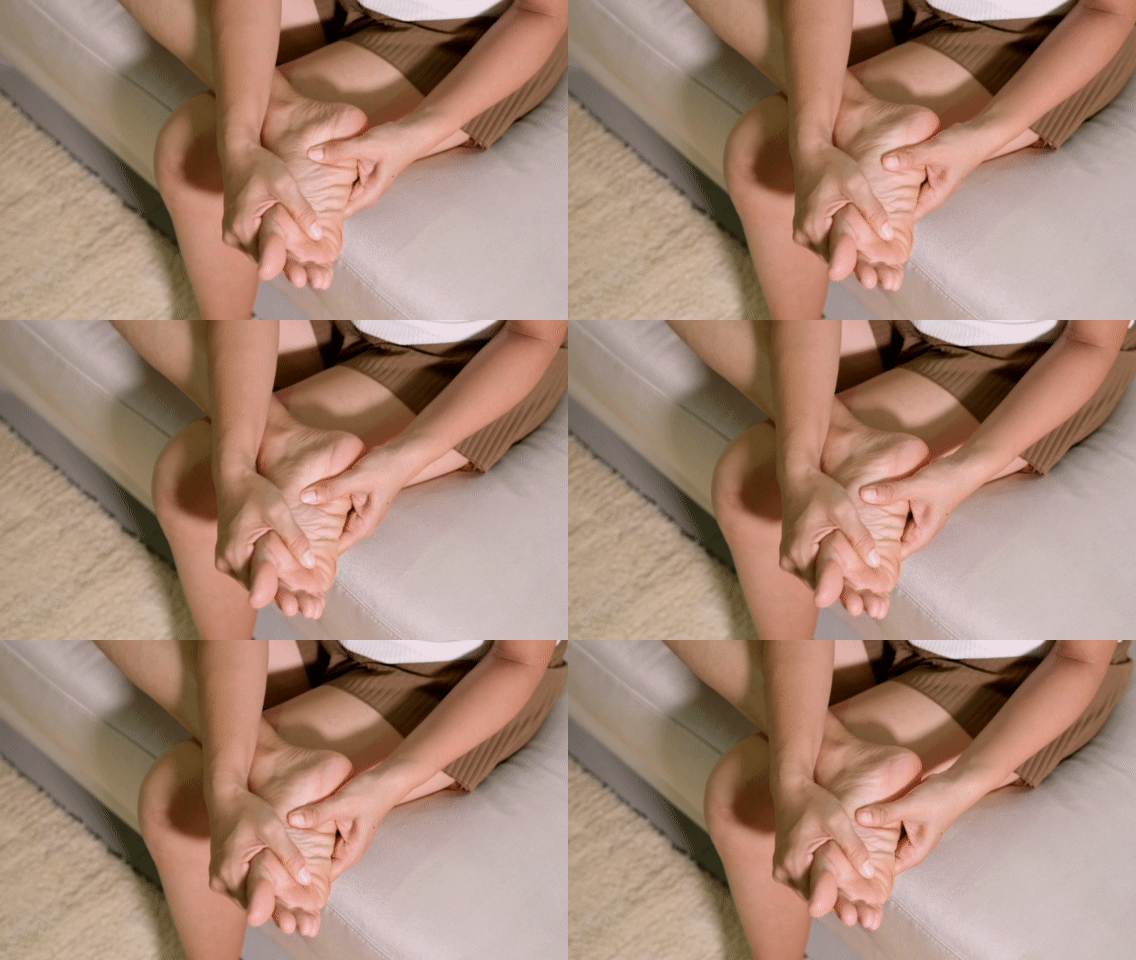
If Foot Pain Keeps Returning, It May Be a Stability Problem
When discomfort shows up in multiple areas during walking, a common denominator is often excessive inward rolling of the foot, known as overpronation. Pronation is normal and helps absorb shock. When it becomes excessive, the arch collapses beyond its intended range. That collapse increases strain across the entire foot.
The goal shouldn't be softer cushioning (as that doesn't address the source) but better control of the foot's motion. Structured arch support designed to limit overpronation can reduce repetitive stress across the arch, ball, lateral column, and midfoot simultaneously!
To understand why, it helps to look at how this movement pattern affects each region.
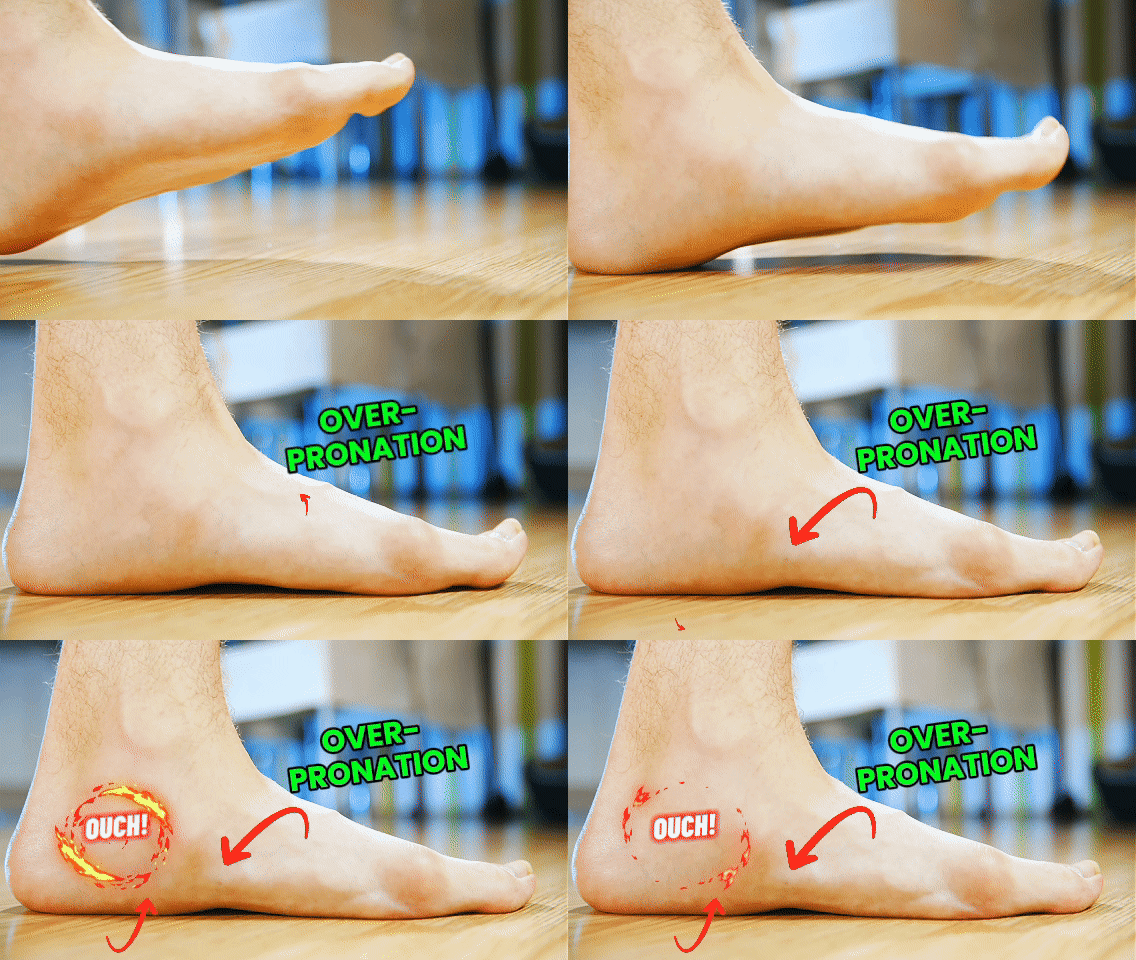
Bottom of the Foot and Arch Pain
Pain along the sole or arch is often related to strain on the plantar fascia and supporting ligaments. During walking, the arch flattens slightly to absorb force and then springs back to help move the body forward.
When that flattening becomes excessive, strain increases through the plantar tissues. Over time, repetitive overload and excessive stretching can lead to inflammation and persistent pain on the bottom of the foot.
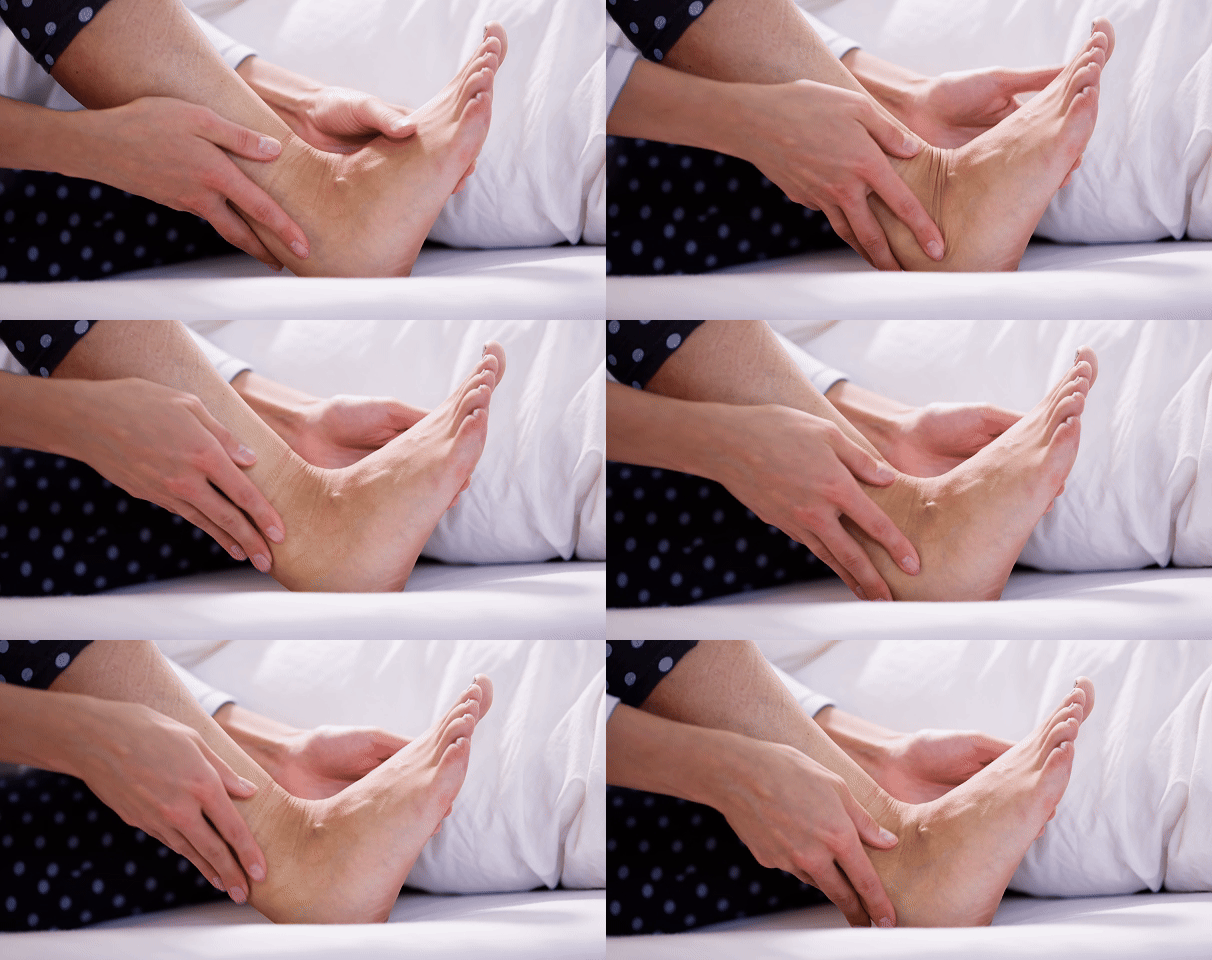
Pain on the Outside of the Foot
Lateral foot pain frequently develops when the outer structures of the foot compensate for instability. If the arch over-collapses during activity, the body attempts to stabilize the foot. The peroneal tendons and lateral ligaments work harder to control motion, increasing load along the outer column. Irritation may develop along the outside of the foot and/or ankle.
Although the discomfort is on the outside of the foot, the source is the excessive flattening of the arch during activity.
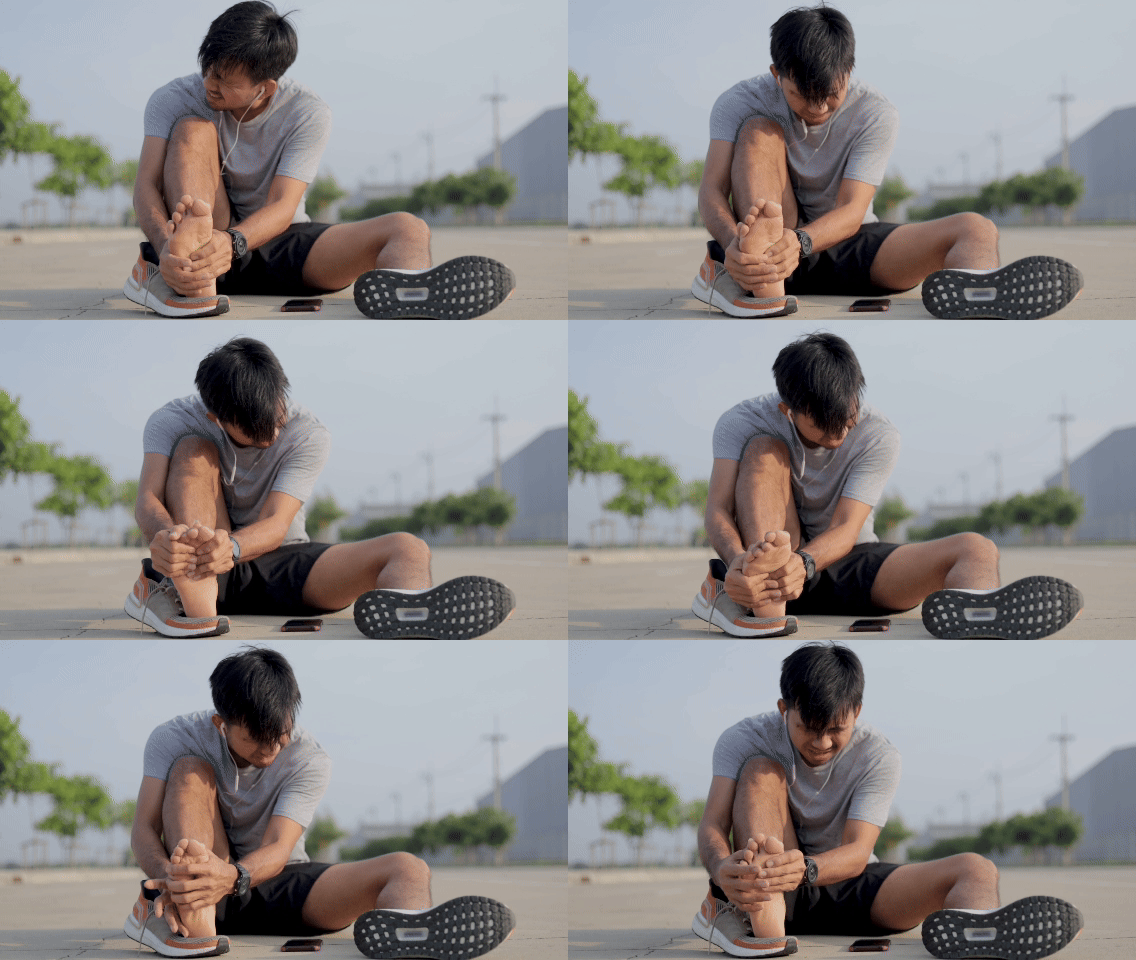
Ball of the Foot Pain
The forefoot is designed to bear weight after the arch stabilizes the foot. When overpronation allows excessive collapse, weight distribution can shift forward and inward. Pressure beneath the metatarsal heads increases, significantly beyond what they were designed to support.
Over time, this altered load transfer can contribute to burning or sharp pain in the ball of the foot. While there are multiple causes of forefoot pain, arch instability and abnormal load distribution are common contributors in active adults.
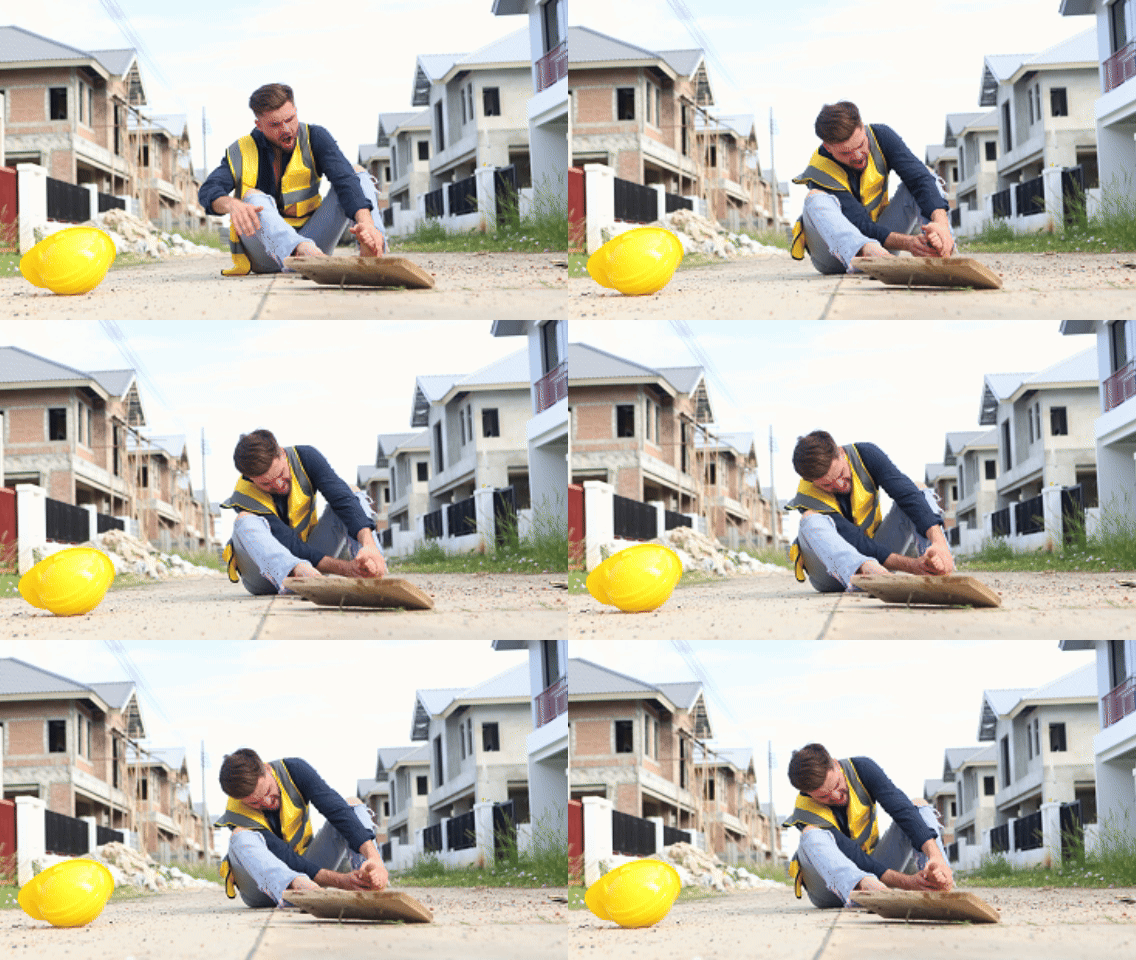
Pain on the Top of the Foot
Top of foot pain may initially seem unrelated to arch mechanics. However, excessive pronation and inward rolling alters midfoot alignment. As the arch collapses, dorsal joints can experience increased compression and extensor tendons (the tendons that run along the top of the foot and ankle) may be subjected to repetitive strain.
Chronic instability through the midfoot can lead to irritation across the top of the foot during walking or running. Not all dorsal foot pain is mechanical, but in recurrent activity-related cases, overpronation often plays a role.
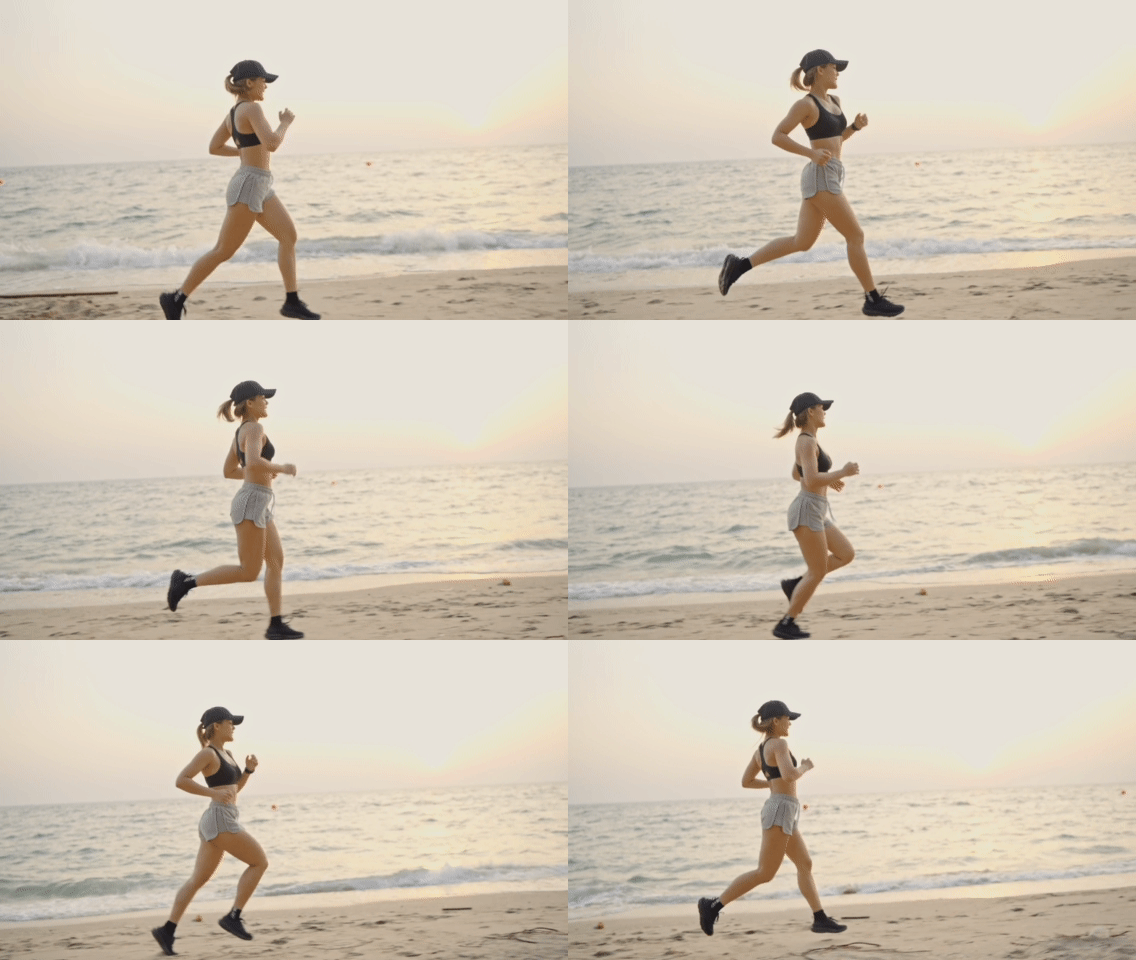
The Shared Movement Pattern
The location of the pain may differ from person to person. However, the underlying cause often does not.
When overpronation is addressed, strain across multiple regions can decrease at the same time. Instead of chasing each painful spot individually, stabilizing the way the foot moves can reduce the repetitive overload contributing to symptoms.
Not all foot pain is caused by overpronation. Trauma, nerve conditions, arthritis, and structural deformities must always be considered. However, with many common types of foot pain, overpronation is often a common mechanical driver at work.
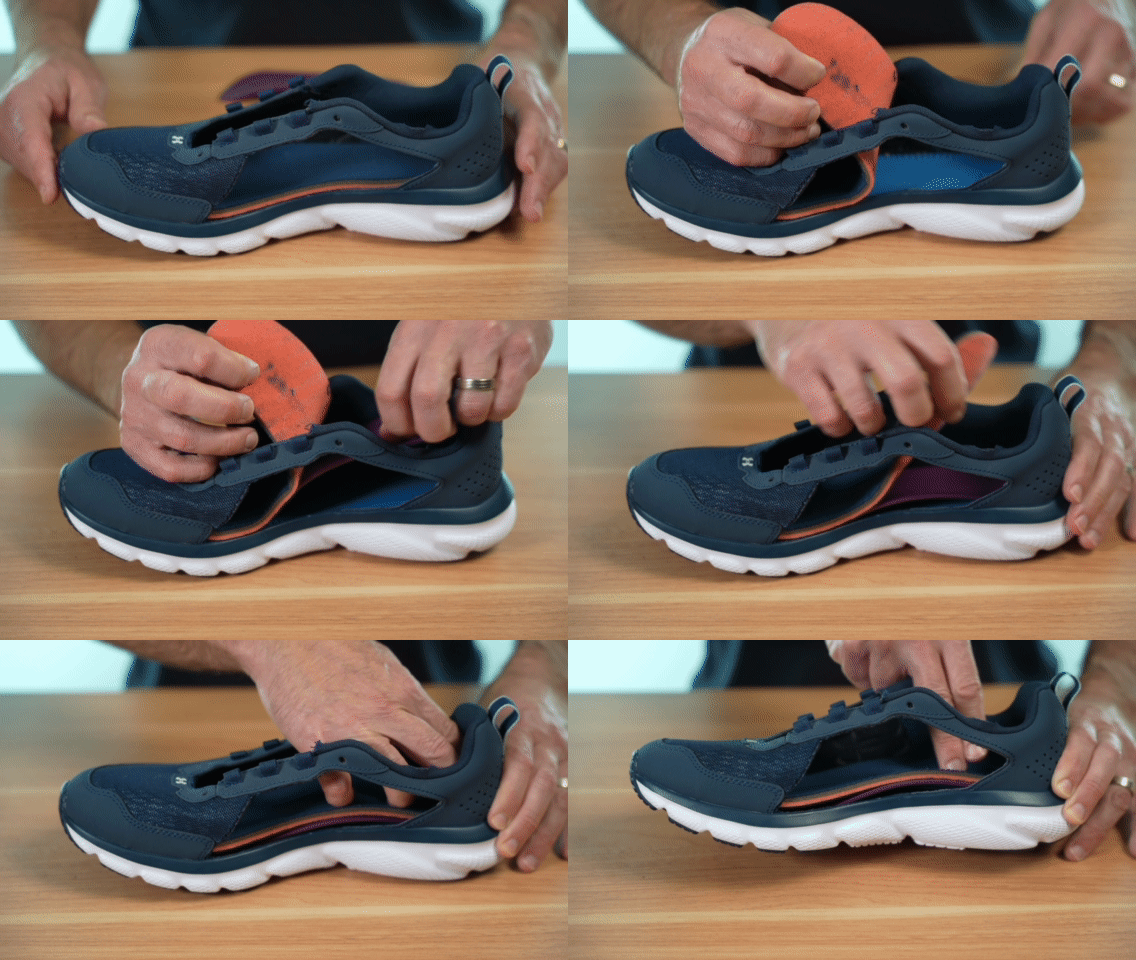
Why Cushioning Isn’t Enough and What Actually Helps
Softer shoes and gel inserts can reduce surface pressure, but they do not control how the foot moves. If the arch continues to overpronate with each step, tissues across the arch, forefoot, lateral column, and midfoot remain under repetitive strain. Cushioning absorbs impact. It does not correct instability.
A properly designed arch support limits excessive pronation and stabilizes the arch during walking. By resisting collapse, tension through the plantar tissues decreases, pressure across the forefoot redistributes more evenly, lateral structures no longer need to compensate as aggressively, and midfoot alignment improves.
Instead of addressing each pain location separately, stabilizing the underlying movement pattern can reduce strain across multiple regions of the foot at once.
Our Top 5 Arch Supports for 2026
The following arch supports are designed to meet these criteria (some much better than others). Rather than compressing like soft foam inserts, they provide consistent arch stabilization step after step, helping reduce the mechanical strain that contributes to many common types of activity-related foot pain.
🏆Our 2026 Top Pick🏆
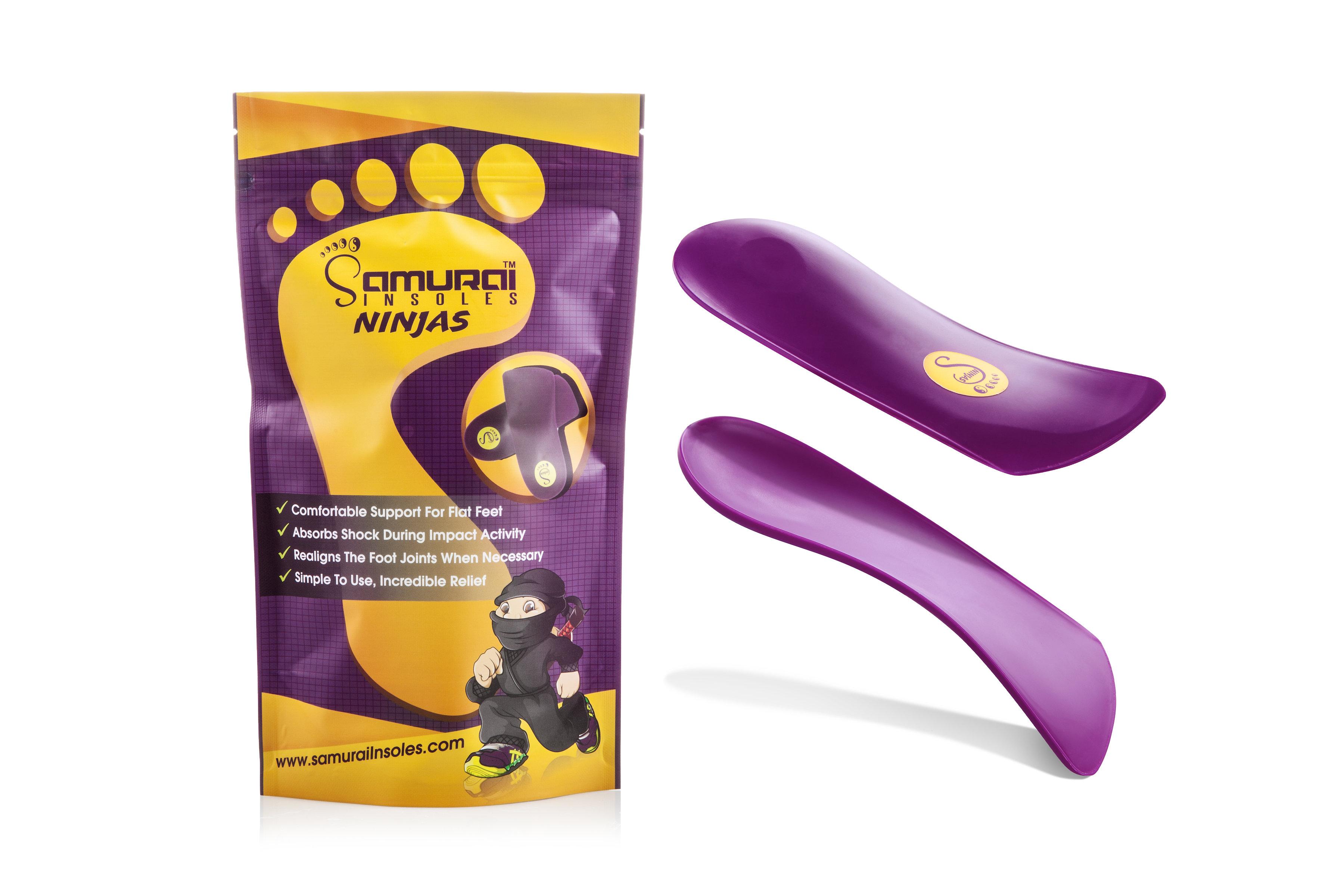
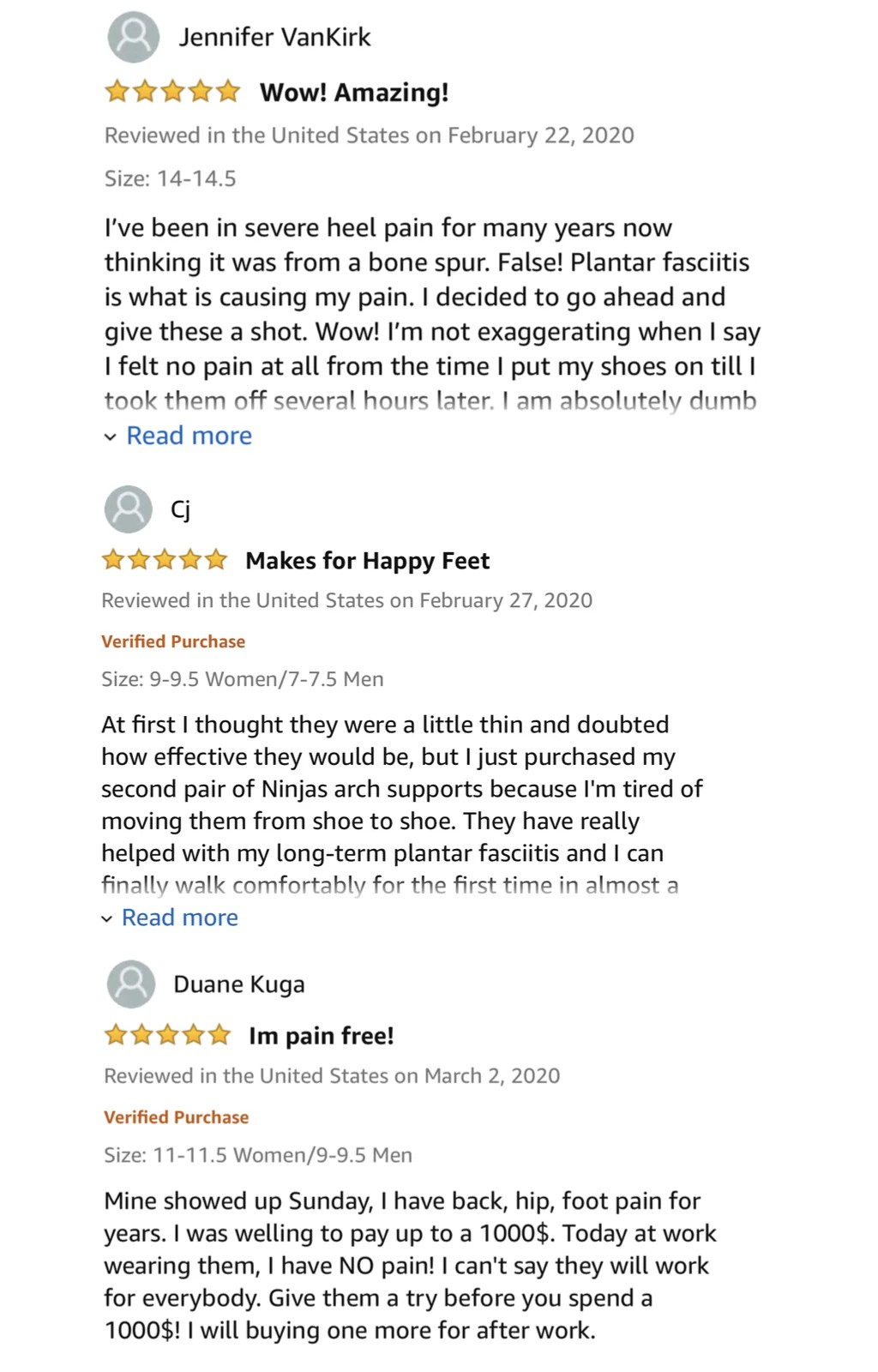
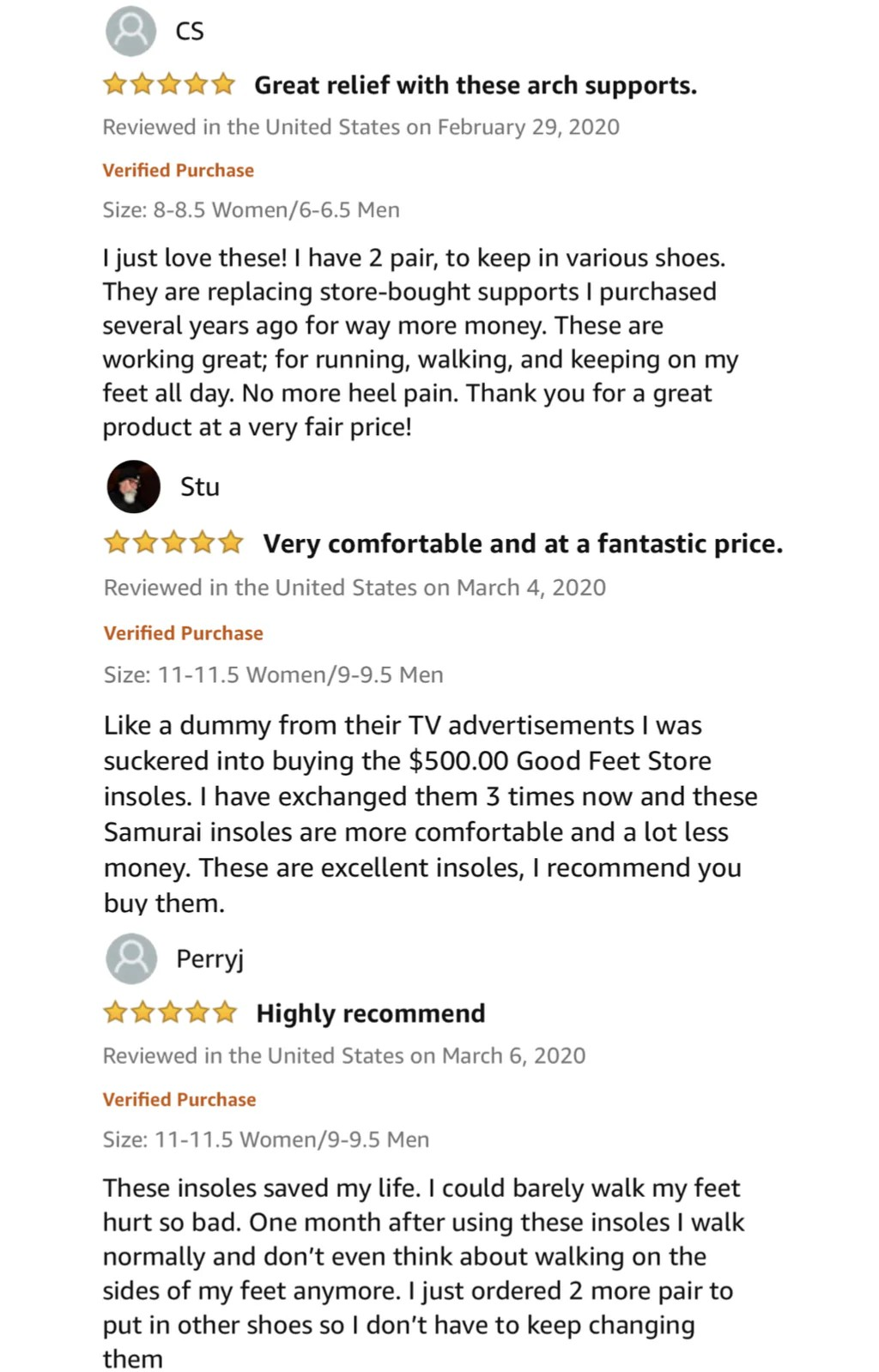
#1- Samurai Insoles Ninjas ⭐⭐⭐⭐⭐
Podiatrist designed and made by an orthotic lab in the United States, Ninjas are one of the few arch support shoe inserts that combine true orthotic structure with everyday comfort.
Instead of relying on soft foam or gel, Ninjas comfortably support your arch and stabilize your heel. The result? You move naturally again -without the common foot pains that comes from overpronation.
I originally designed Samurai Insoles Ninjas after years of treating patients with common foot pain who couldn’t find inserts that actually corrected the problem. Most insoles felt soft but didn’t support the arch properly, so I built one that did.
Why we recommend them:
✔️ Support that actually treats the cause, not just the symptoms
✔️ Comfortable enough for daily wear in most shoes
✔️ Durable construction — nothing to compress or wear out
✔️ 60-day comfort guarantee + 1-year warranty
✔️ Made in the USA by a professional orthotic lab
✔️ Price: Less than $40 - fraction of the cost of custom orthotics or many competing alternatives
Verdict: Real correction, real comfort, real results.
Relief to your door in 24 hours for most Prime Members!
No Prime? No Problem!
Free US shipping and returns
Relief to your door in 24 hours for most Prime Members!
No Prime? No Problem!
Free US shipping and returns
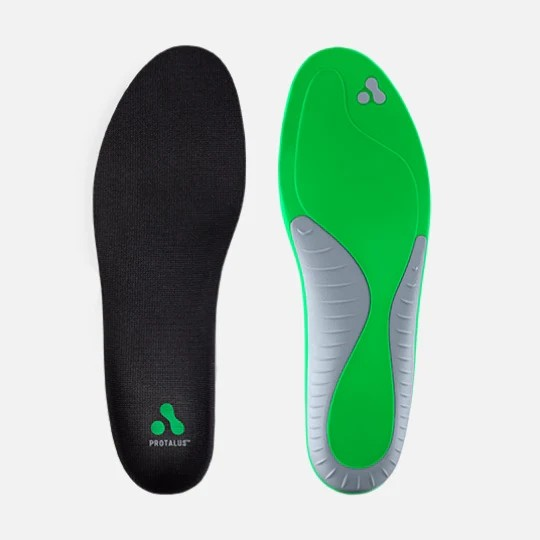
#2- Protalus Insoles T-100 Elite
You’ve probably seen Protalus all over social media. They’ve become popular for their thick, supportive feel - and they do help some people with flat feet or mild overpronation.
That said, they’re bulkier and pricier than most everyday users need.
Highlights:
-
Some users find them bulky with less than adequate support
-
Hybrid design with a firm plastic base
-
May work well for wider or bulky shoes or heavy daily wear
-
Price: ~$64.95
-
90-day warranty
-
Made overseas
Verdict: Supportive and stylish, but at nearly double the price, they’re a splurge for most.
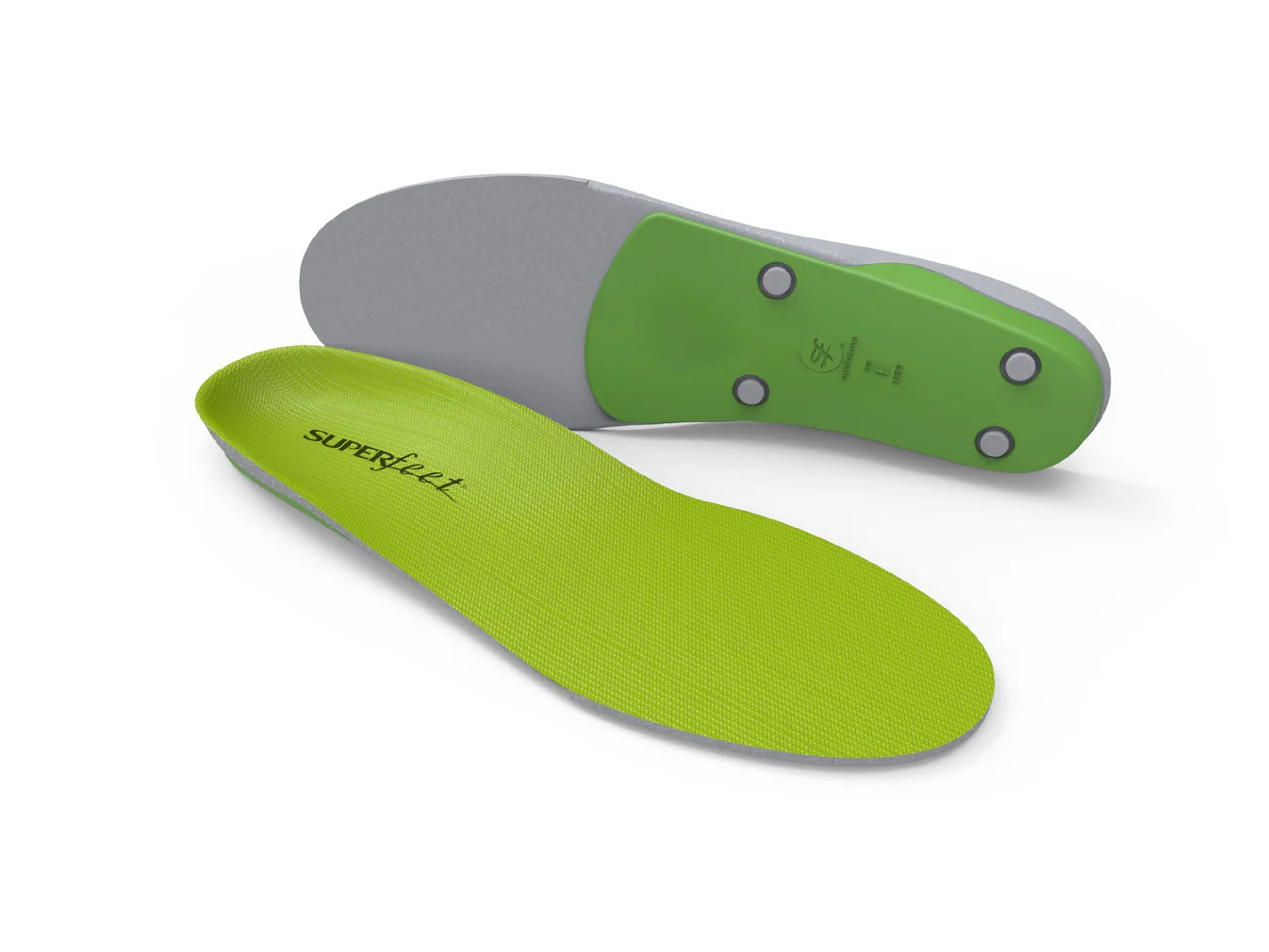
#3- Superfeet Green Insoles
A classic name in insoles - Superfeet helped pioneer modern arch support. Their Green model is firm, stable, and built to last.
However, the extremely rigid outer shell can make them feel much too stiff for casual wear, and they’re bulkier than most options here.
Highlights:
-
Strong, structured support, but often too stiff for many users.
-
Reliable for athletic and work shoes
-
Price: ~$54.95
-
60-day warranty
-
Made outside the USA
Verdict: Proven performance, but less comfortable for all-day wear.
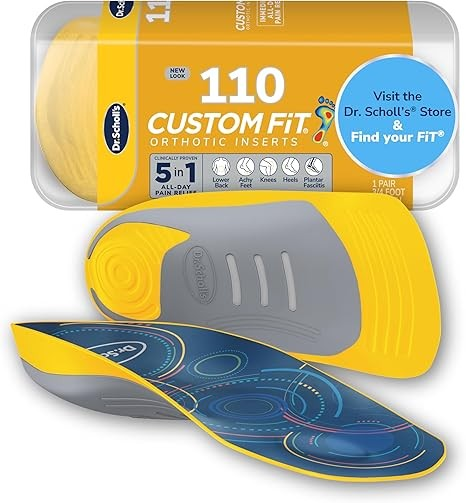
#4- Dr. Scholl's Custom Fit Orthotic Inserts
The “Custom Fit” line from Dr. Scholl’s sounds impressive, but the name oversells it a bit. These are comfortable enough, but they rely on a plastic bottom layer that flexes WAY too much (in our opinion). Also, because they sit on top of your shoe’s insole, they can feel bulky or unstable.
Some listings note they’re not returnable once opened, so check the seller’s current policy before you buy.
Highlights:
-
Widely available in stores, but potentially terrible return policy on Amazon
-
Shorter length may take getting used to and can lead to instability and shifting.
-
Price: ~$50.00
-
90-day warranty
-
Made outside the USA
Verdict: Convenient and easy to find, but limited support and return options for the price.
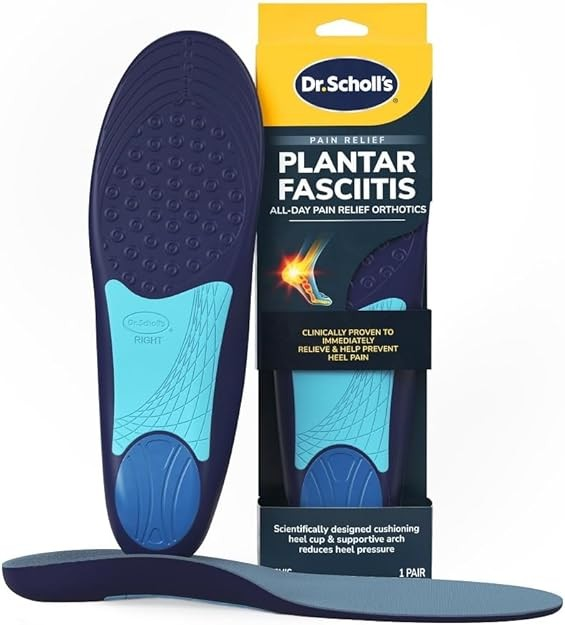
#5- Dr. Scholl's Plantar Fasciitis Orthotics
The most affordable insert on this list, and probably the one you’ve seen at every drugstore.
They’re light and cushiony, but that’s about where the benefits stop.
Highlights:
-
Good short-term comfort, extremely poor long-term support for many
-
Price: ~$15.00
-
Thin design fits most shoes easily
-
90-day warranty
-
Made outside the USA
Verdict: Budget-friendly but ultimately may not have adequate support to relieve or prevent plantar fasciitis for some users.
Final Takeaway
If you’re serious about relieving foot pain, don’t settle for an insert that only feels soft — look for one that supports proper motion.
Frequently Asked Questions About Foot Pain and Arch Support
Can overpronation really cause pain in different areas of the foot?
Yes. Overpronation changes how force moves through the foot during walking. When the arch collapses excessively, strain can shift to different structures depending on individual anatomy and activity level. Some people feel it in the arch, others in the ball of the foot, the outside edge, or across the top. The location varies, but the underlying movement pattern can be similar.
Is all foot pain caused by overpronation?
No. Foot pain can result from injuries, arthritis, nerve conditions, stress fractures, and systemic inflammatory disease. However, when pain worsens with walking, improves with rest, and returns despite softer shoes, mechanical overload from excessive inward rolling is often a contributing factor.
Why doesn’t cushioning fix foot pain?
Cushioning reduces pressure against irritated tissue, but it does not control motion. If the foot continues to roll inward excessively with each step, the arch remains unstable and repetitive strain continues. Mechanical problems usually require mechanical solutions.
How does arch support help multiple types of foot pain?
A properly designed arch support limits excessive pronation and stabilizes the arch during walking. By reducing arch collapse, it can decrease strain across the plantar fascia, redistribute pressure in the forefoot, reduce compensation along the outer foot, and improve midfoot alignment. Instead of treating one painful spot, it addresses the movement pattern contributing to strain.
How do I know if my foot pain is mechanical?
Foot pain is often mechanical when it:
-
Worsens with walking or standing
-
Improves with rest
-
Returns despite softer shoes
-
Occurs in load-bearing regions of the foot
If pain is severe, associated with swelling or bruising, or does not improve, medical evaluation is recommended.
Will structured arch support feel uncomfortable at first?
Structured support may feel different from soft inserts because it is designed to control motion rather than compress. Most people adjust within several days as their foot adapts to improved alignment. Proper sizing and placement are important for comfort.
Can arch support help if my pain is on the outside or top of my foot?
In many cases, yes. Pain in these areas can develop when the foot compensates for excessive inward rolling. Stabilizing the arch may reduce strain on lateral tendons and midfoot structures by improving alignment during walking.
Should I see a doctor for foot pain?
You should seek medical evaluation if you experience sudden severe pain, significant swelling, numbness, bruising, pain after trauma, or symptoms that do not improve. Not all foot pain is mechanical, and proper diagnosis is important when red flags are present.

“I’ve treated thousands of cases of foot pain that came back again and again until we addressed the real cause – overpronation. Once the arch is supported correctly, the feet can finally heal.”
Best,
Dr. Tom Lembo
Samurai Insoles are branded products made by our company, Samurai Wellness, LLC, and we truly believe that our products are the best on the market! This article is a promotion of the Samurai Insoles branded products that we sell. It is important to know that our products are not intended to diagnose, treat, cure, or prevent any disease.