Shin Splints Made Simple by a Podiatrist
by Dr. Tom Lembo | 6 min read
This article was written by a podiatrist and the creator of Samurai Insoles, a product developed to control excess foot pronation. While we make Samurai Insoles, this article reflects our professional medical experience and review of foot supports.

Shin splints have a way of showing up right when you are trying to get healthier. That sharp, achy feeling along the front of your leg can make even a simple run or long walk feel tougher than it should.
The good news is that shin splints are very fixable, and once you understand what is actually causing them, the path to relief becomes much clearer. Let’s break down what they are, why they happen, and what you can do to finally get ahead of the pain.
What Are Shin Splints?
Shin splints, or medial tibial stress syndrome, develop when the tissues along the shinbone become irritated from repeated stress. Most people notice a dull, achy discomfort along the inner or front edge of the shin during activity.
Sometimes the pain improves as you warm up, then returns as the workout goes on. As the irritation builds, even day to day walking can feel uncomfortable.
Runners, walkers, dancers, and anyone spending long hours on their feet can develop shin splints. The symptoms often start out mild, then get progressively more limiting if the underlying cause is not addressed.
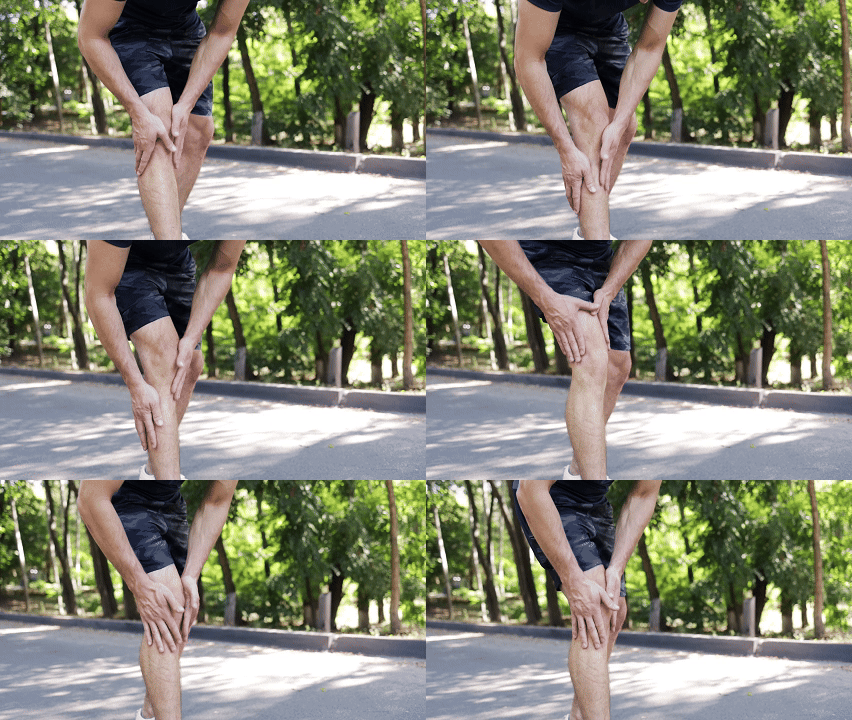
Why Shin Splints Happen
Shin splints are often seen as an overuse injury, but the real culprit is usually mechanical. The most common and most overlooked issue is foot overpronation.
When the foot collapses inward during walking or running, the shinbone rotates with it. The muscles along the shin work overtime to control this motion. With every step, that pulling force irritates the connective tissue. Over time, it becomes painful enough to disrupt training or even routine movement.
People are surprised to learn how many everyday factors contribute to overpronation. A worn out pair of running shoes, a sudden increase in training, or long hours on hard surfaces can all magnify the problem. Flat feet, flexible arches, or even neutral arches that tire easily can make the shin work harder than it should.
Here is what most people with shin splints have in common:
-
The foot is rolling inward more than it should.
-
The shin is being forced to rotate and stabilize with each step.
-
The strain builds until the tissue becomes irritated and painful.
Once you understand that chain reaction, the treatment becomes much more straightforward.

How to Know If You Have Shin Splints
Most people describe a tenderness that spreads along a section of the inner or front shinbone rather than one pinpoint spot. Pressing along the area usually brings out the discomfort. The pain often improves with rest but quickly returns once activity starts up again.
Stress fractures create sharper, more focused pain that does not warm up with movement, while shin splints tend to feel achy and more spread out. If you are unsure whether your pain is shin splints or a stress injury, it is always reasonable to seek medical evaluation. But in most cases, the pattern of pain makes it clear.

How to Treat Shin Splints
Treatment of shin splints depends primarily on the cause of pain and discomfort, as well as the severity of symptoms.
Shin splints can progress into a stress fracture if not treated properly. In most cases, shin splints can heal completely with appropriate remedial care. A doctor might suggest one or more of the following:
-
Orthotic shoe inserts to address foot pronation and stabilize the foot and ankle area
-
Rest, ranging from weeks to few months, depending on the severity
-
Ice application to provide relief from pain and swelling
-
Non-steroidal anti-inflammatory pain medications
-
Stretching exercises to reduce stiffness in the calf muscles
-
Wearing appropriate footwear with proper cushioning
-
Physical therapy
With proper care and treatment, shin splints can be resolved completely. The key to prevention is by gradually easing into a physical activity or sport rather than rushing back.
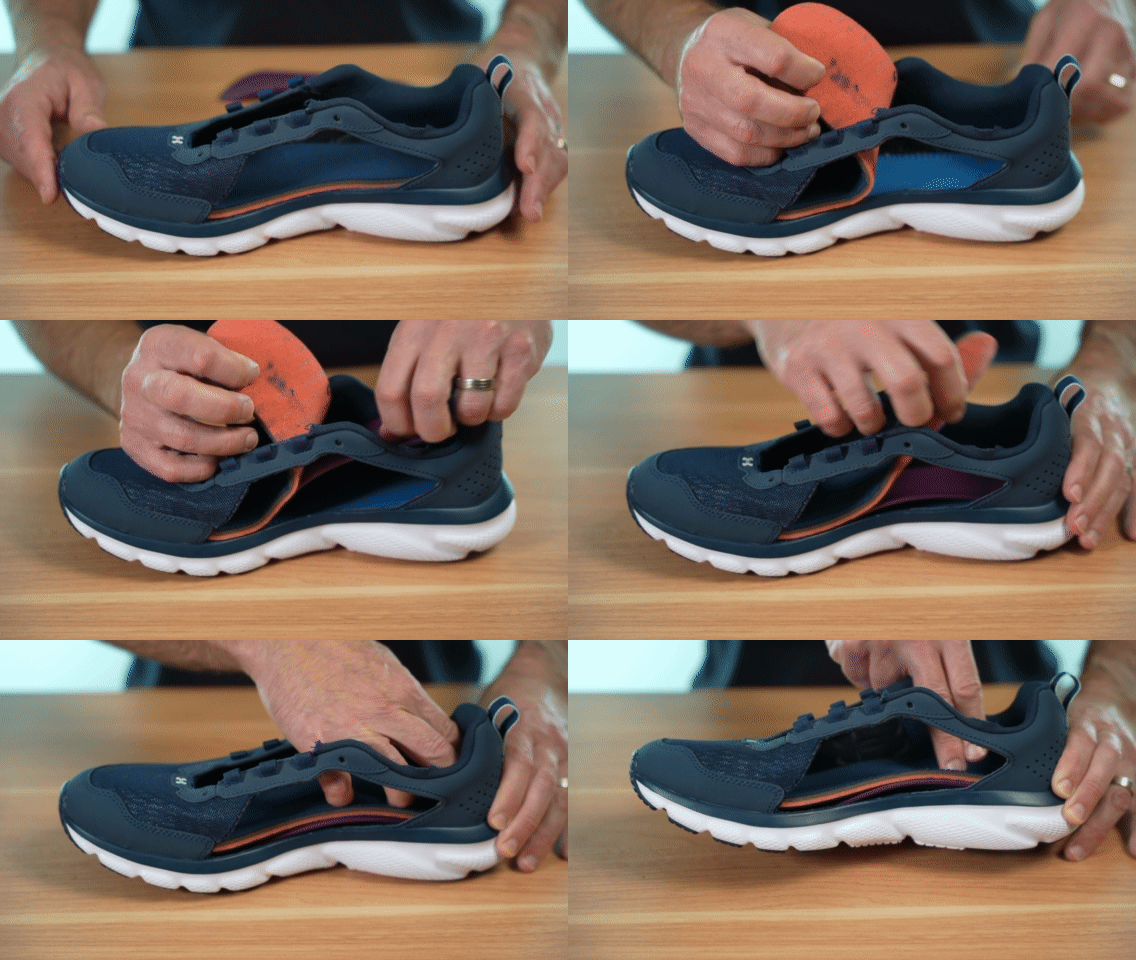
How Do I Pick the Right Orthotic Shoe Insert for Shin Splints?
For something that affects so many people, shin splints aren't talked about often enough. Shin splints can be serious enough to make the simple act of exercising tough for anyone - regardless of age and fitness.
For many, the answer is orthotic shoe inserts, sometimes custom-made by a podiatrist. These cost hundreds of dollars, and can often end up limiting the types of shoes you can wear.
However, shin splints can also be addressed with a pair of over-the-counter orthotic shoe inserts. Not only do they average a tenth of the cost, but they are available in many different shapes and sizes, so you don't have to get rid of what's in your closet.
It's also important to understand cushioning alone may not be the answer! While you would think a cushioned shoe insert is what would be needed, a more supportive orthotic insert that supports the arch and stabilizes the foot is actually what's needed to relieve shin splint pain!
It sounds a little too good to be true, but once you understand how to treat shin splints, and how a good orthotic helps, you'll start to see why the solution doesn't have to break the bank.
Our Top 5 Shin Splints Orthotics for 2026
🏆 "Our 2026 Top Pick" 🏆
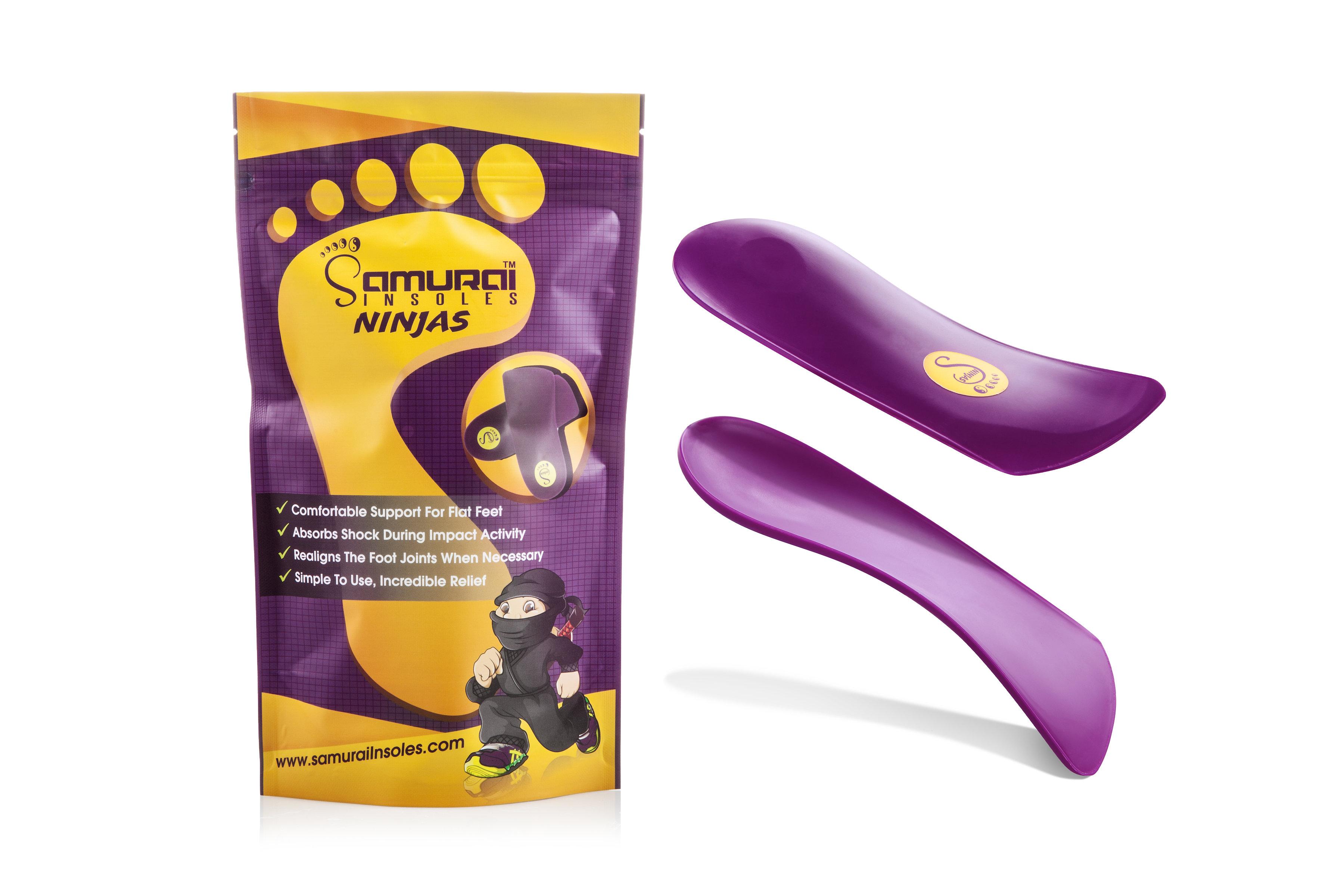
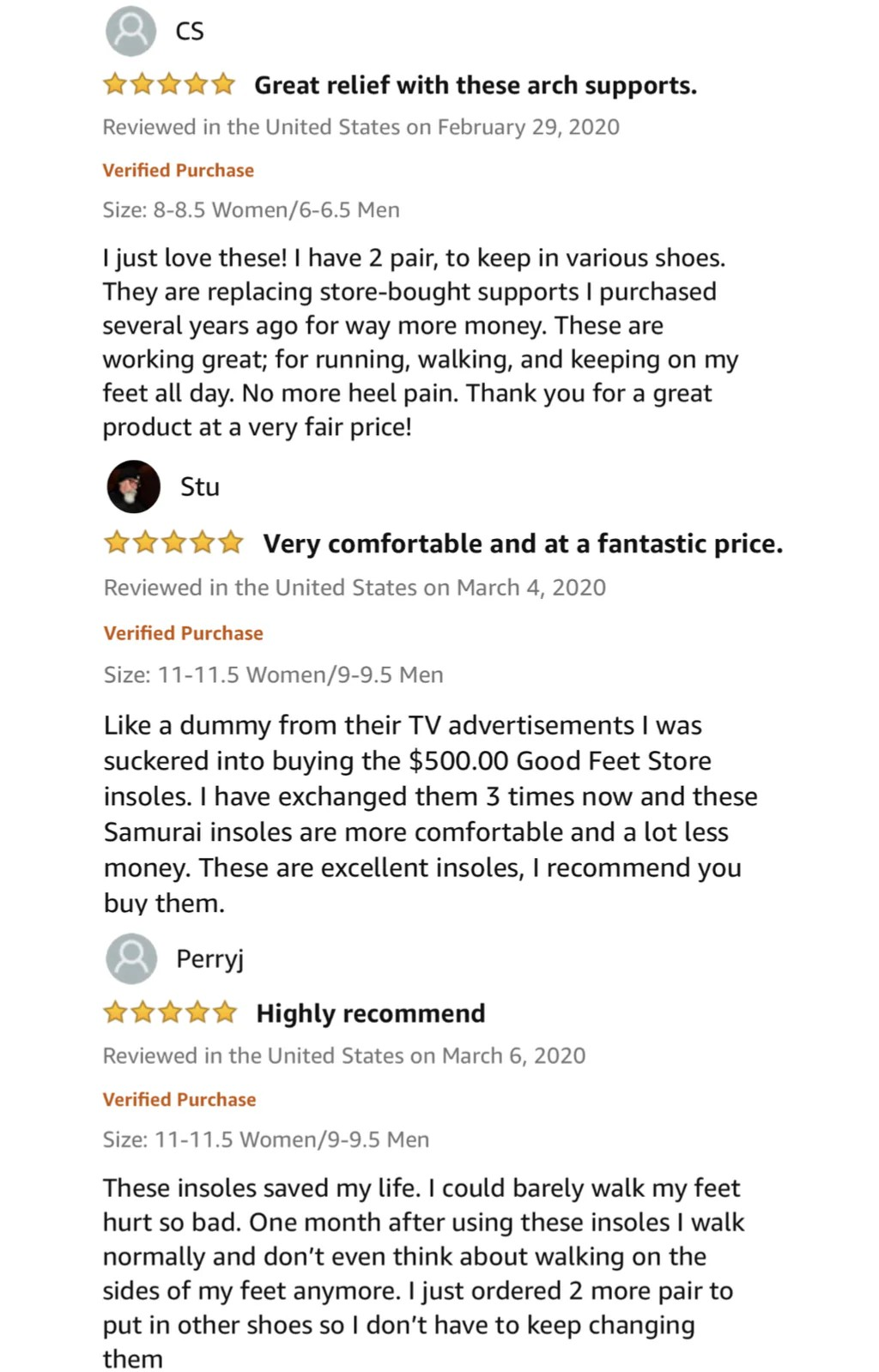
#1- Samurai Insoles Ninjas ⭐⭐⭐⭐⭐
Podiatrist designed and made by an orthotic lab in the United States, Ninjas are one of the few arch support inserts that combine true orthotic structure with everyday comfort.
Instead of relying on soft foam or gel, Ninjas comfortably support your arch and stabilize your heel. The result? You move naturally again -without the shin splint discomfort that comes from overpronation.
I originally designed Samurai Insoles Ninjas after years of treating patients with shin splints who couldn’t find inserts that actually corrected the problem. Most insoles felt soft but didn’t support the arch properly, so I built one that did.
Why we recommend them:
✔️ Support that actually treats the cause, not just the symptoms
✔️ Comfortable enough for daily wear in most shoes
✔️ Durable construction — nothing to compress or wear out
✔️ 60-day comfort guarantee + 1-year warranty
✔️ Made in the USA by a professional orthotic lab
✔️ Price: Less than $40 - fraction of the cost of custom orthotics or many competing alternatives
Verdict: Real correction, real comfort, real results.
Relief to your door in 24 hours for most Prime Members!
No Prime? No Problem!
Free US shipping and returns
Relief to your door in 24 hours for most Prime Members!
No Prime? No Problem!
Free US shipping and returns
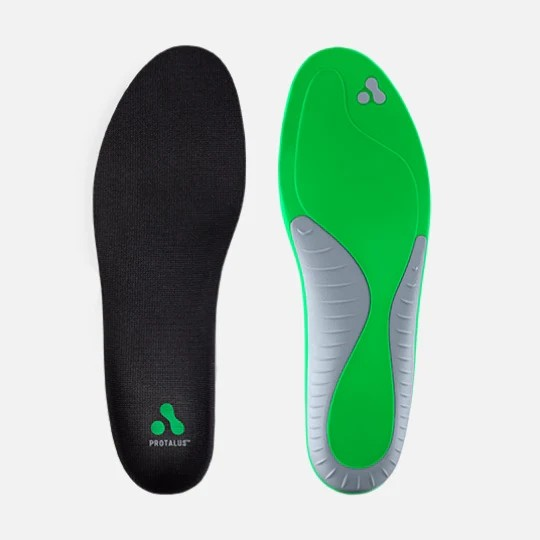
#2- Protalus Insoles T-100 Elite
If you've been on the internet in the last year, you haven't sneezed without seeing a Protalus ad. They are comfy and can be very beneficial for flat feet. Protalus' hefty price tag remains their biggest negative.
✔️ Design: Protalus "kind of" has an orthotic merged with an insole. Protalus took a different approach by combining a thick piece of plastic on the bottom of the insole, instead of inside. This can do the job in some circumstances, but it also makes them thicker than Samurai Insoles, reducing the choices of shoes they'll fit in well.
❌ Price: Here's the problem with Protalus; they're so expensive! At the time of writing this the current retail is $64.95. Oof. For that kind of money you'd better REALLY love them. It also reduces the chances you'd buy a whole bunch of them to put in all of your shoes.
✔️ 90 Warranty: Protalus products have a 90 day warranty. It's not one year like the Samurai Insoles Ninjas, but better than nothing...
❌ Made in the USA: Protalus insoles are NOT made in the USA unfortunately. For the price we had hoped they were.
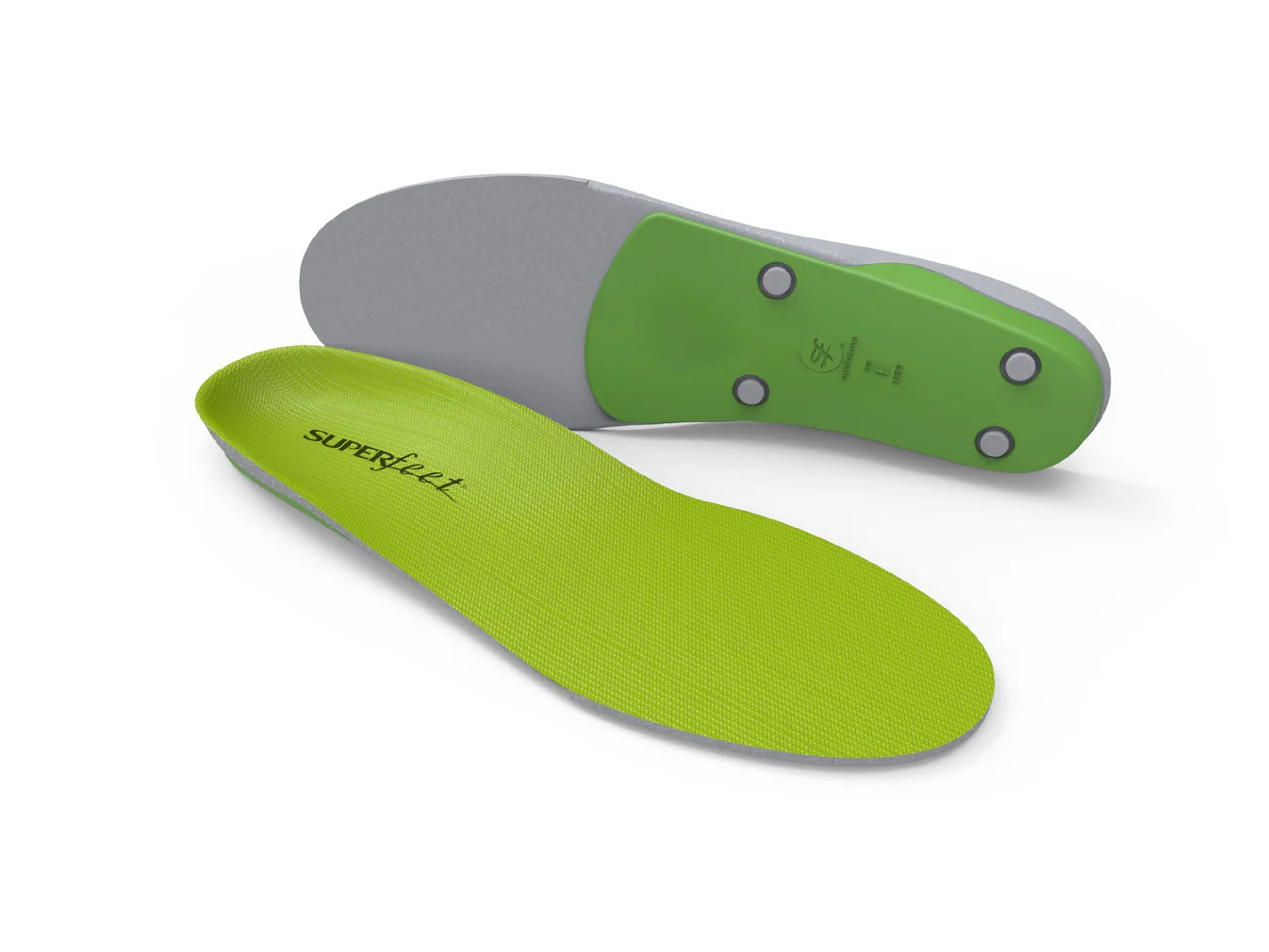
#3- Superfeet Green Insoles
Superfeet have been around a LONG time. They got their start being sold in retail sporting goods stores, and have transitioned to selling online in recent years, but this has presented the company with some challenges.
✔️ Design: If you've checked out the Protalus design, just know that the Superfeet did it first. They were one of the first to incorporate an orthotic plastic layer on the outside of the insole. Once again, this does the job, but it also makes them thicker than the Samurai, reducing the choices of shoes they'll fit well in.
✔️ Price: Superfeet are borderline in the pricey range, current retail at the time of writing this article is $54.95
✔️ 60 Day Warranty: Superfeet green insoles come with a 60 day warranty, significantly less than Samurai Insoles Ninjas or Protalus products.
❌ Made in the USA: Superfeet are not made in the USA unfortunately. Once again, for this price we had hoped they would be.
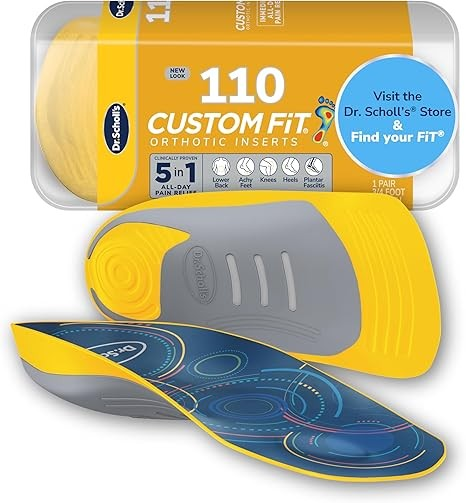
#4- Dr. Scholl's Custom fit Orthotic Inserts
✔️ Design: Not a full-length insole, but still designed to be placed on top of your shoe's factory insoles, which may make it difficult for some people to adjust to the feel. Once again, Dr. Scholl's Custom Fit combines a thick piece of plastic to the bottom of the insole, instead of inside the insole itself.
❌ Price: Dr. Scholl's Custom fit Orthotic Inserts currently are our second most expensive selection. At the time of this article they have a retail price of approximately $60
✔️ 90 Day Warranty: Dr. Scholls Custom Fit Orthotic Inserts have a 90 day warranty.
❌ Made in the USA: Dr. Scholl's "Custom fit" Orthotic Inserts are not made in the USA unfortunately.
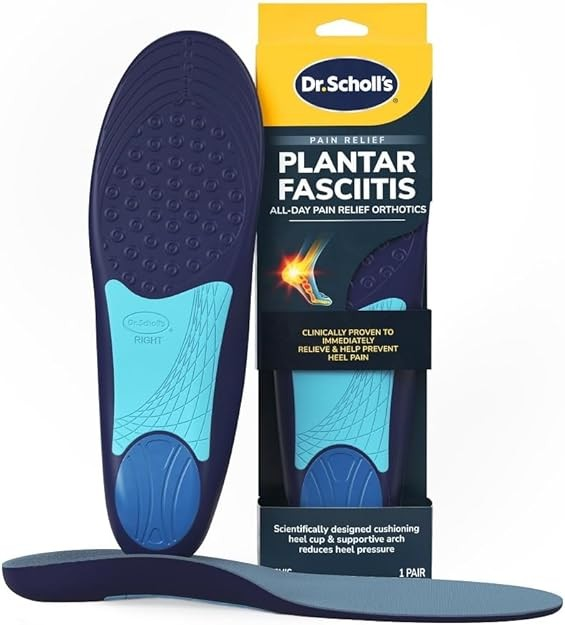
#5- Dr. Scholl's Plantar Fasciitis Orthotics
❌ Design: Regrettably, there is not much to be said. Dr. Scholl’s Pain Relief Orthotics for Plantar Fasciitis consist of a very thin insole with equally thin piece of plastic attached to the bottom. It is uncertain how much weight they can support before losing their shape, but it appears that their capacity is limited.
✔️ Price: Well, at least they're affordable at $15! You may just get what you pay for however.
✔️ 90 Day Warranty: Dr. Scholl’s Plantar Fasciitis Orthotics have a 90 day warranty.
❌ Made in the USA: Dr. Scholl's Pain Relief Orthotic Inserts are not made in the USA unfortunately.
Whichever you choose to fight your shin splint pain, choose now!
The longer you allow shin splint pain to linger, the harder it is to get rid of, and the longer it will take!

Best,
Dr. Tom Lembo
Samurai Insoles are branded products made by our company, Samurai Wellness, LLC, and we truly believe that our products are the best on the market! This article is a promotion of the Samurai Insoles branded products that we sell. It is important to know that our products are not intended to diagnose, treat, cure, or prevent any disease.