I’m a Podiatrist - Here’s What I Tell Every Patient With a Bunion
by Dr. Tom Lembo - Podiatrist & Creator of Samurai Insoles
This article was written by a podiatrist and the creator of Samurai Insoles, a product developed to control overpronation. While we make Samurai Insoles, this article reflects our professional medical experience and review of bunion arch support.
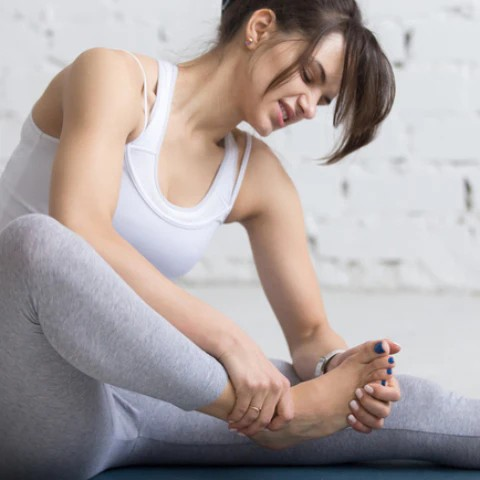
As a practicing podiatrist, I’ve seen thousands of patients walk into my exam room with the same concern:
“Is this bunion going to get worse?”
What they’re really asking is:
Will it hurt more?
Will I need surgery?
And is there anything I can do to stop it?
The answer? Yes - but it starts by understanding what’s really causing the problem.
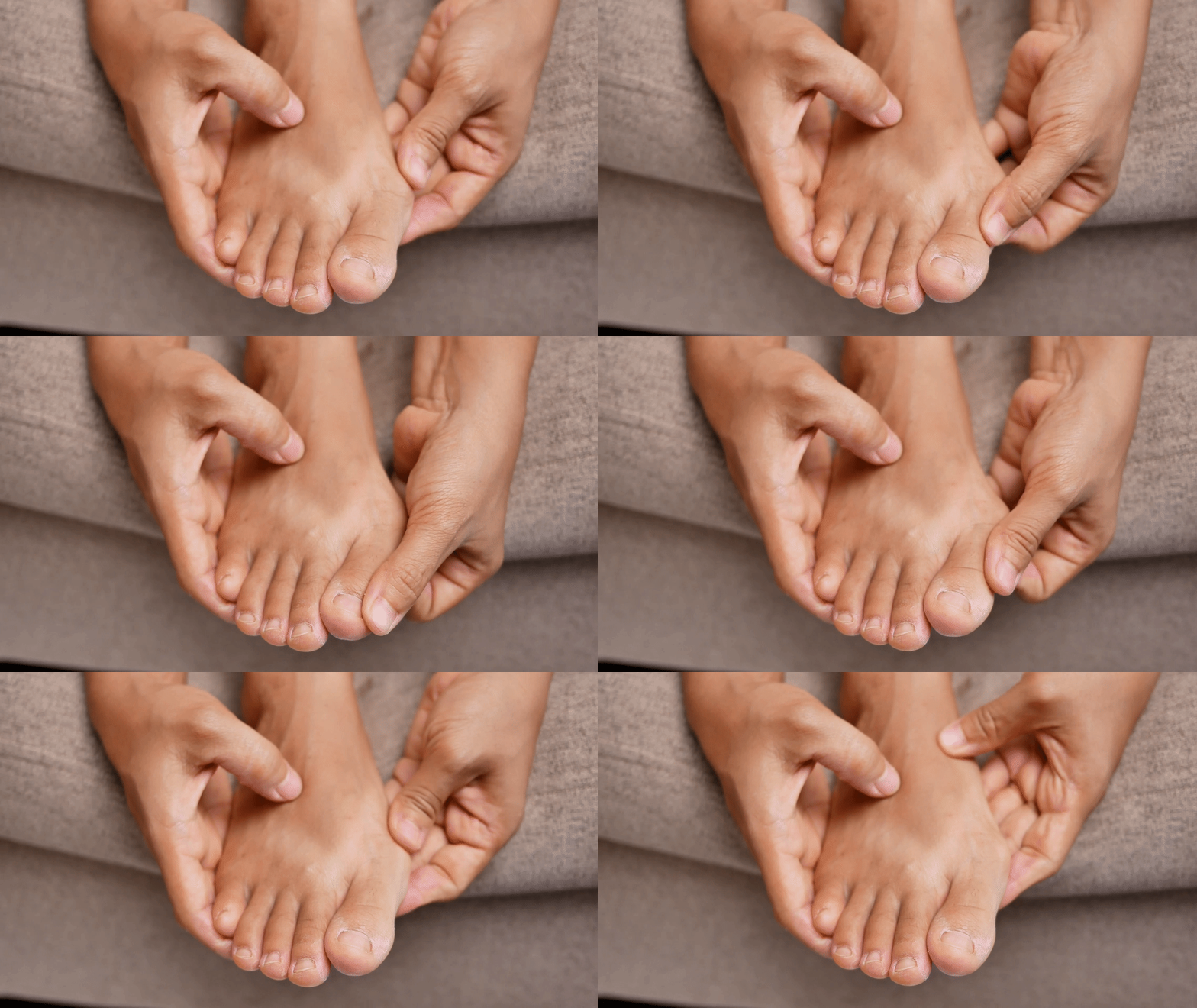
What Is a Bunion?
A bunion is a bony bump that forms at the base of the big toe, caused by gradual misalignment of the joint where the toe meets the foot.
This is known as the first metatarsophalangeal joint.
The outward bump is just the tip of the iceberg. What’s really going on is a structural problem deep in the foot.
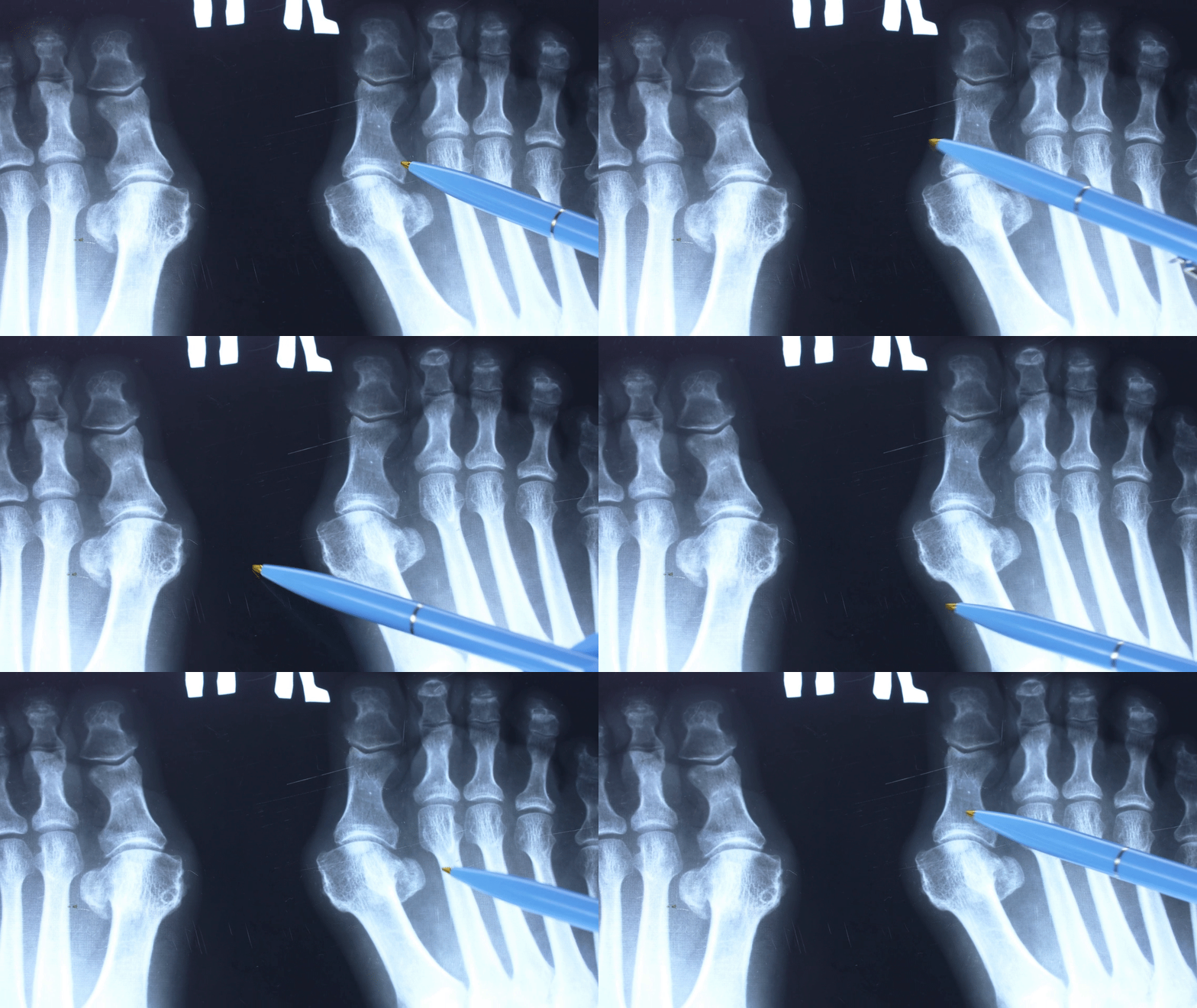
What Causes Bunions?
There isn’t one single answer.
Bunions are caused by a combination of genetic, mechanical, and environmental factors.
Some people ask me, "Are bunions hereditary?" - and yes, in many cases, they are.
If one or both of your parents had bunions, your foot shape and mechanics may put you at higher risk.
Others ask, "How do bunions form?" or "How do you get bunions?" The answer is often excessive pronation.
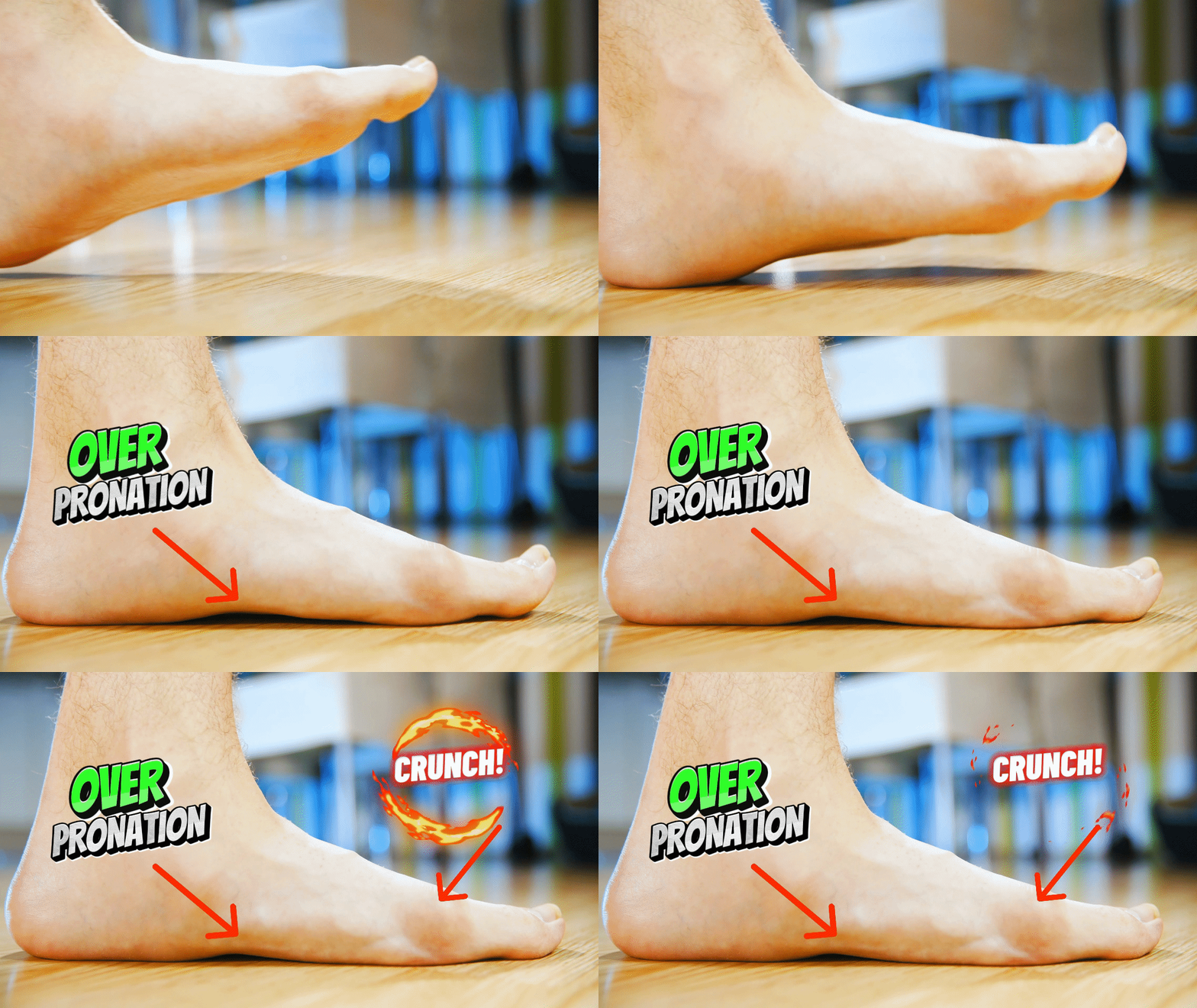
The Underlying Problem: Excessive Pronation
One of the most common causes of bunions I see in my private practice is overpronation - when the arch collapses and the foot rolls inward too much during walking or standing.
When that happens:
-
The forefoot widens
-
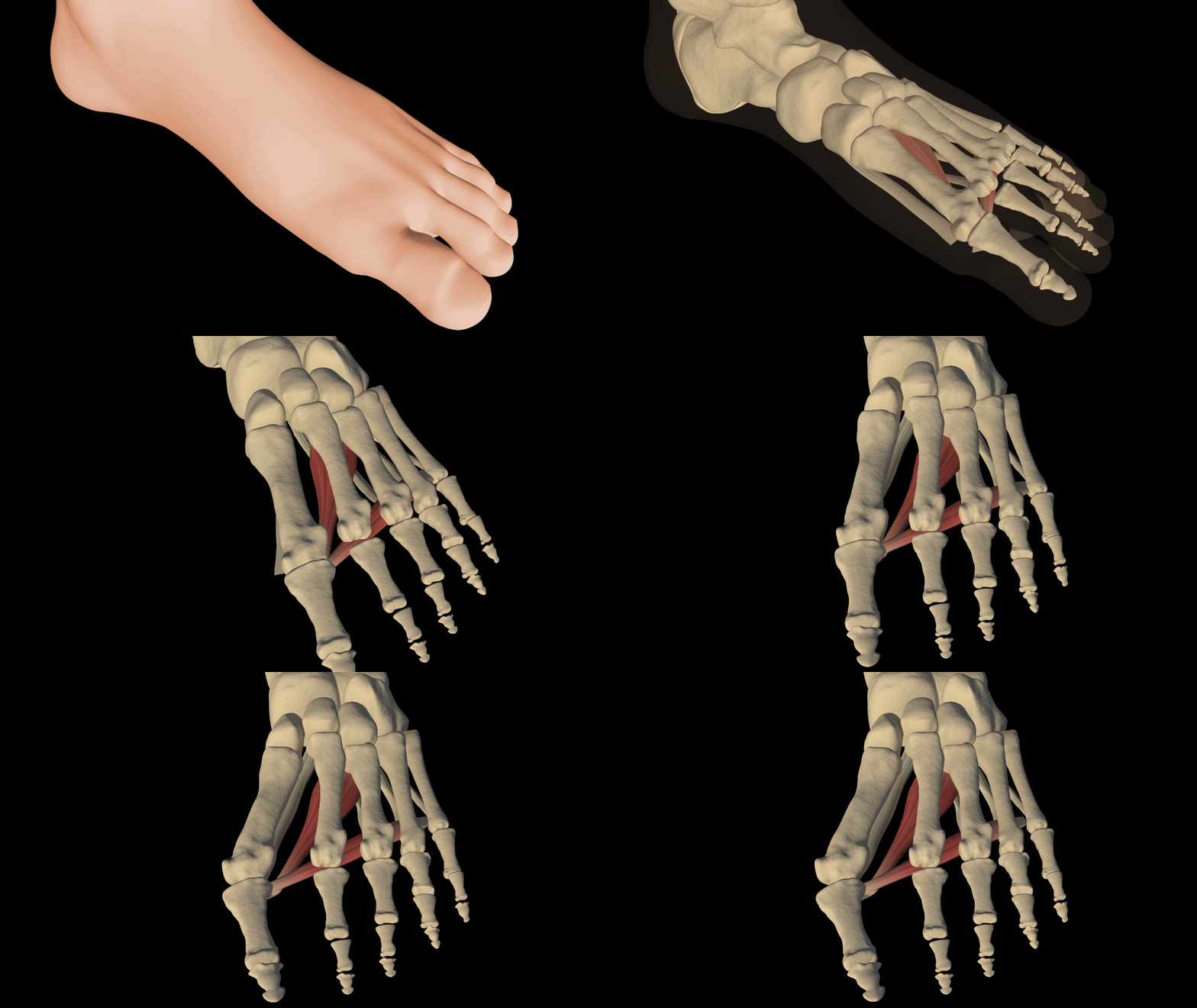
The first ray (the bone behind your big toe) becomes unstable
-
The bunion begins to form - often starting as subtle shifting, then progressing into a more pronounced deformity
Whether it’s a bunion on the big toe or a more advanced deformity, the mechanism is often the same.
First Ray Hypermobility: The Accelerator
Another hidden factor I often find is first ray hypermobility. It means the long bone behind the big toe joint is too mobile - too loose.
This leads to:
-
Even more instability
-
A worsening bunion over time
-
An increase in both visible deformity and pain
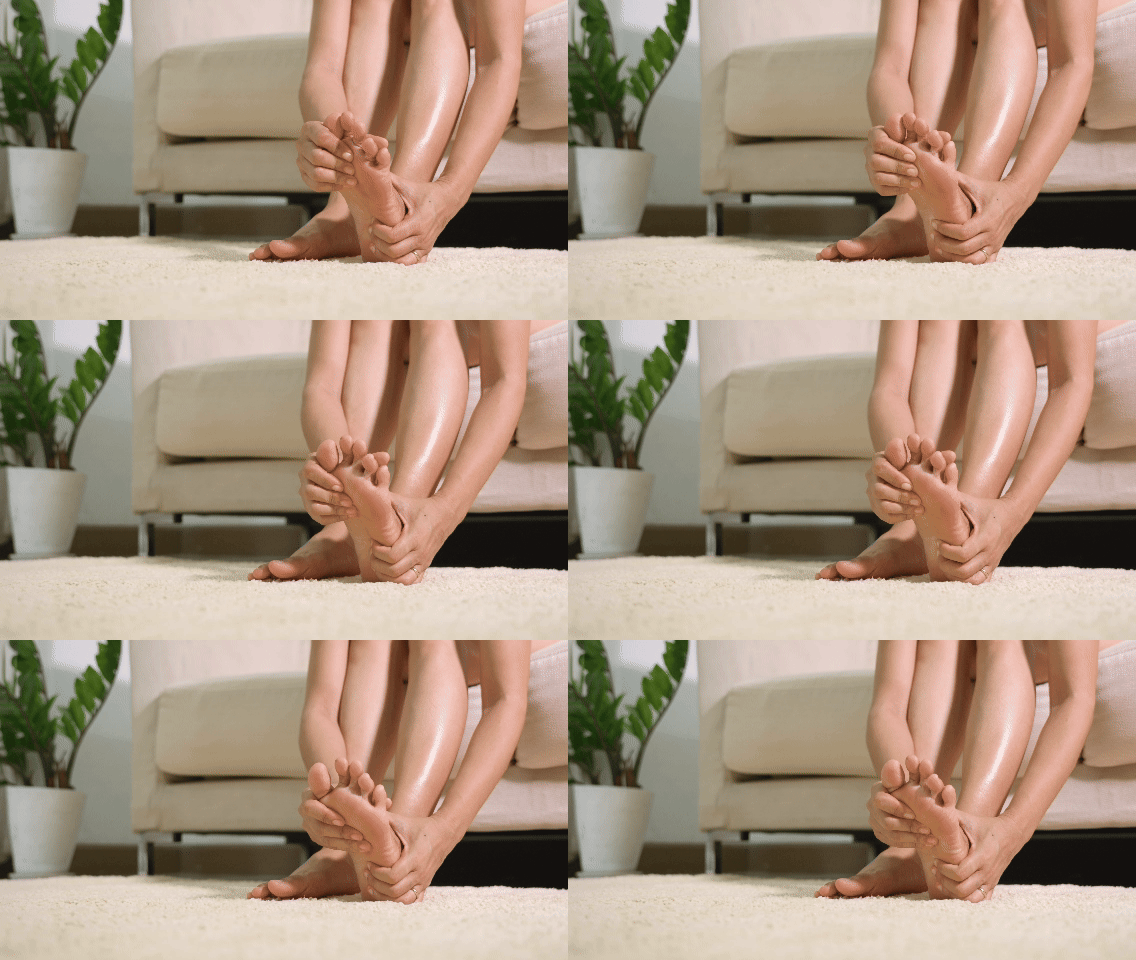
Patients often refer to this pain as “bunion symptoms,” but what they’re really feeling is inflammation from poor joint alignment and overload with every step.
Why Bunion Pain Gets Worse Over Time
Even what looks like a small or mild bunion can cause outsized discomfort. That’s because the joint is under constant, abnormal pressure due to misalignment.
Bunion pain usually starts as occasional soreness. But over time, it progresses into:
-
Chronic joint pain
-
Swelling and redness
-
Limited mobility
-
Difficulty finding shoes that fit
And it all keeps getting worse if the mechanical cause isn’t addressed.
Most Overlooked Solution: Proper Arch Support
One of the biggest myths I hear is that you can “fix” a bunion with a toe spacer or soft cushion.
You can’t.
And while surgery is effective for severe cases, it’s not the first line of treatment for most patients.
The first and most effective way to reduce bunion discomfort - and possibly slow progression?
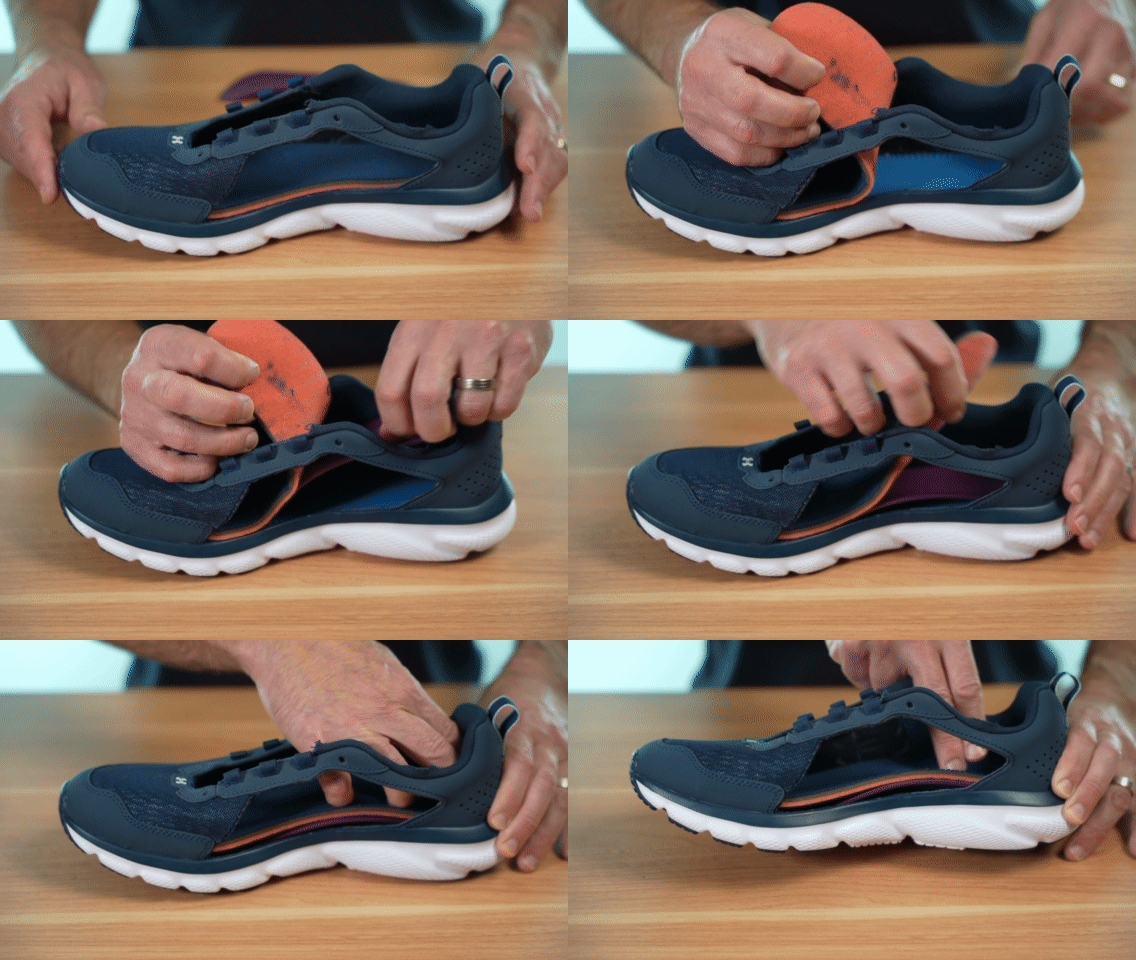
You must support the foot’s arch!
Consistent arch support:
-
Reduces excessive pronation
-
Offloads pressure from the big toe joint
-
Increases stability in the first ray
-
Helps the foot move the way it’s supposed to
-
Supports the foot without adding bulk or complexity
Our Top 5 Arch Supports for Bunions in 2026
When it comes to relieving bunion pain, not every orthotic arch support insert is created equal.
Some focus on soft cushioning, others try to mimic custom orthotics - but few actually correct the motion that causes the pain.
Here’s a closer look at five options that stand out for comfort, design, and value — including the one we recommend most for real, lasting relief.
🏆Our 2026 Top Pick🏆
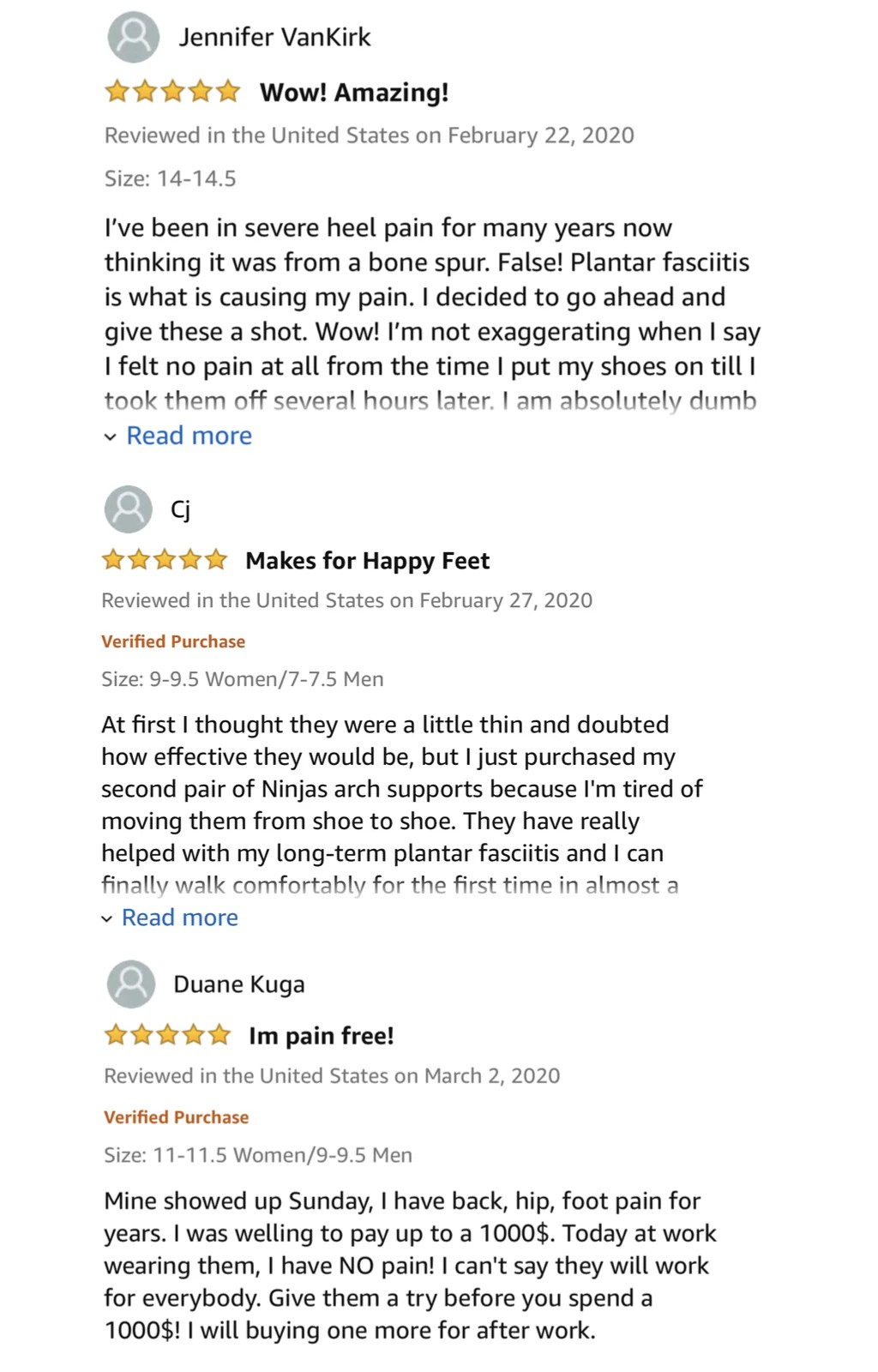
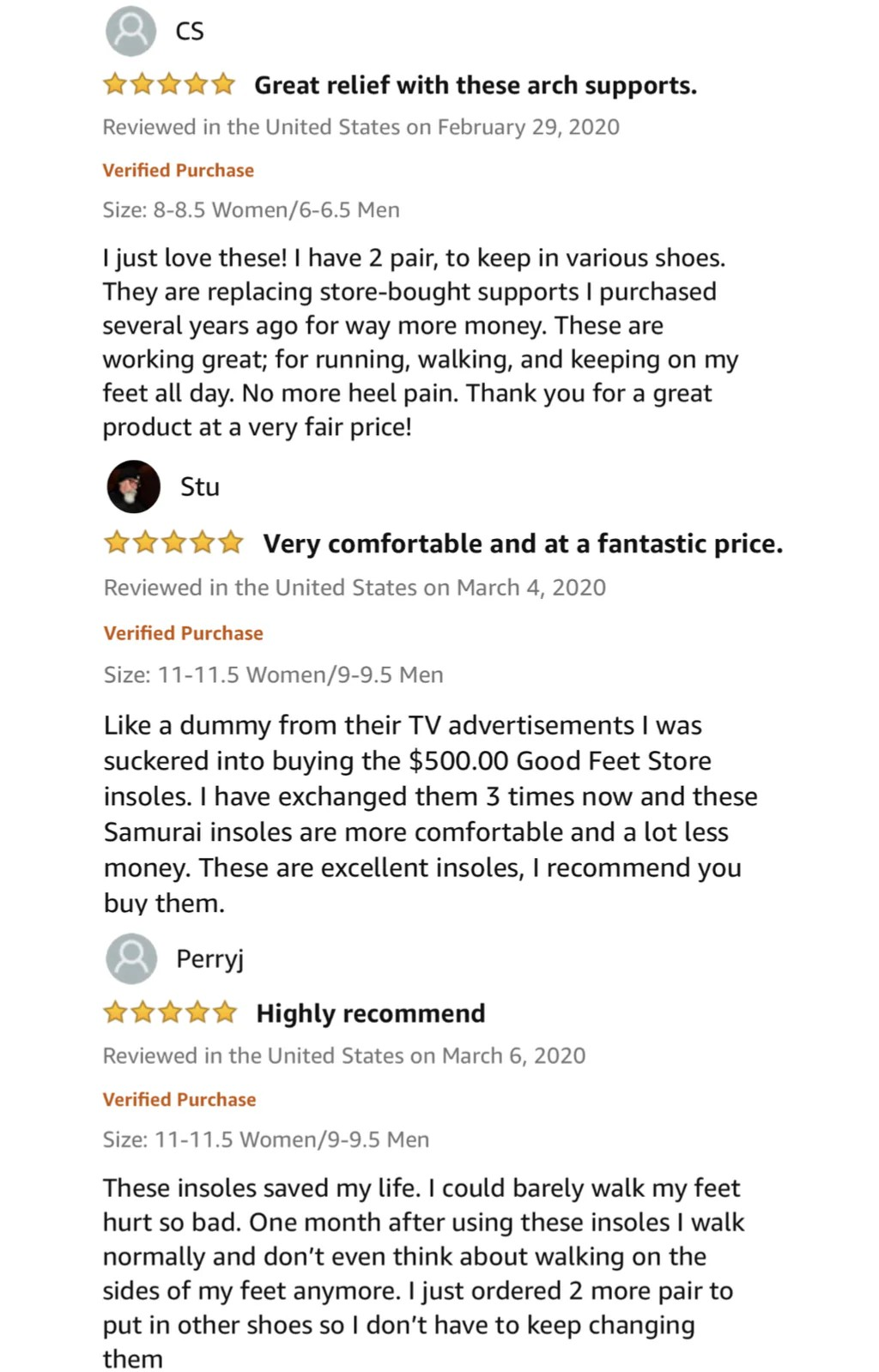
#1- Samurai Insoles Ninjas ⭐⭐⭐⭐⭐
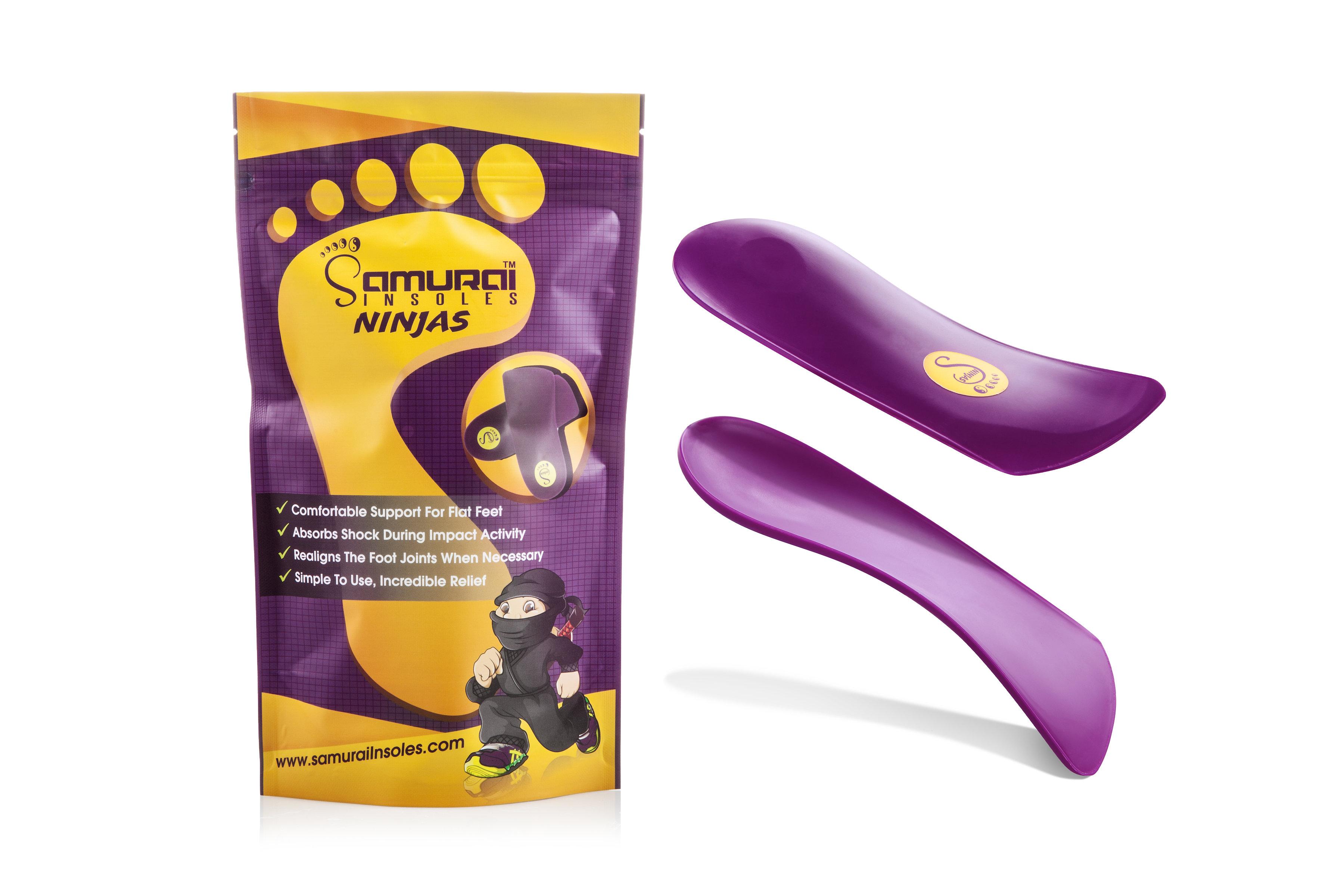
Podiatrist designed and made by an orthotic lab in the United States, Ninjas are one of the few arch support inserts for bunions that combine true orthotic structure with everyday comfort.
Instead of relying on soft foam or gel, Ninjas comfortably support your arch and stabilize your heel. The result? You move naturally again -without the grinding, throbbing bunion pain that comes from overpronation.
I originally designed Samurai Insoles Ninjas after years of treating patients with bunions and overpronation who couldn’t find inserts that actually addressed the problem. Most insoles felt soft but didn’t support the arch properly, so I built one that did.
Why we recommend them:
✔️ Support that actually treats the cause, not just the symptoms
✔️ Comfortable enough for daily wear in most shoes
✔️ Durable construction — nothing to compress or wear out
✔️ 60-day comfort guarantee + 1-year warranty
✔️ Made in the USA by a professional orthotic lab
✔️ Price: Less than $40 - fraction of the cost of custom orthotics or many competing alternatives
Verdict: Real correction, real comfort, real results.
Free U.S. shipping + returns
Free U.S. shipping + returns
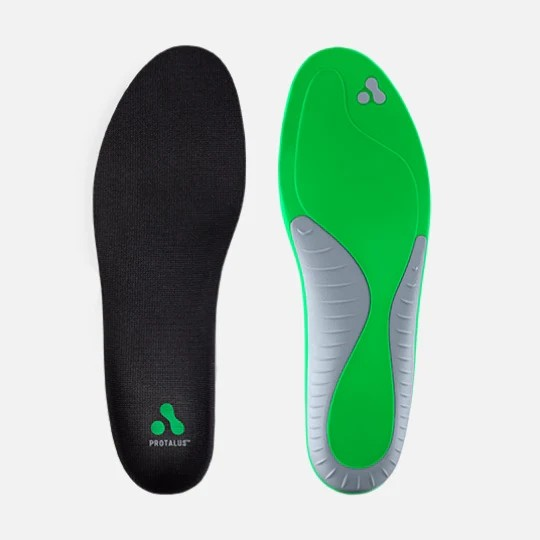
#2- Protalus Insoles T-100 Elite
You’ve probably seen Protalus all over social media. They’ve become popular for their thick, supportive feel - and they do help some people with flat feet or mild overpronation.
That said, they’re bulkier and pricier than most everyday users need.
Highlights:
-
Some users find them bulky with less than adequate support
-
Hybrid design with a firm plastic base
-
May work well for wider or bulky shoes or heavy daily wear
-
Price: ~$64.95
-
90-day warranty
-
Made overseas
Verdict: Supportive and stylish, but at nearly double the price, they’re a splurge for most.
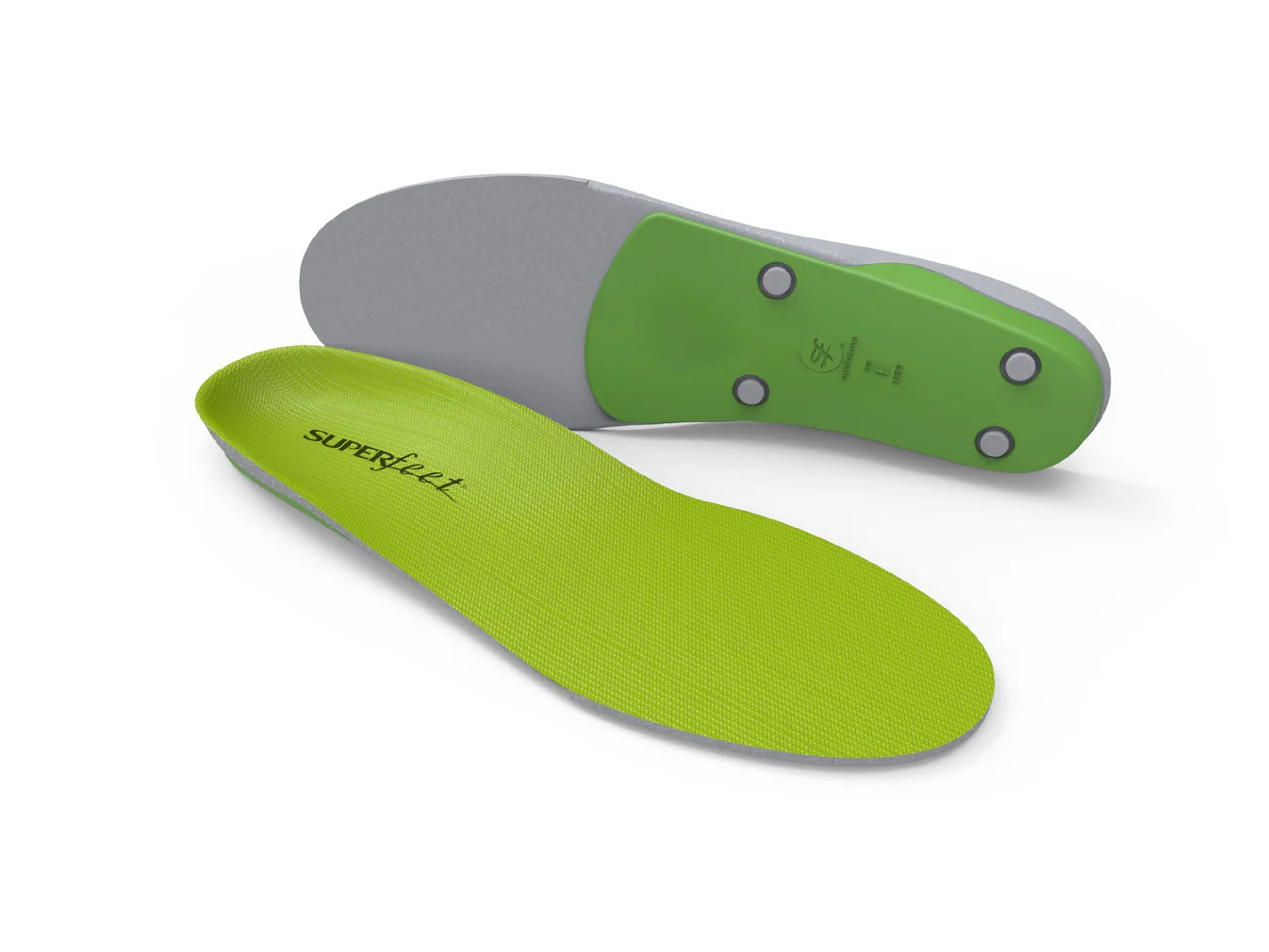
#3- Superfeet Green Insoles
A classic name in insoles - Superfeet helped pioneer modern arch support. Their Green model is firm, stable, and built to last.
However, the extremely rigid outer shell can make them feel much too stiff for casual wear, and they’re bulkier than most options here.
Highlights:
-
Strong, structured support, but often too stiff for many users.
-
Reliable for athletic and work shoes
-
Price: ~$54.95
-
60-day warranty
-
Made outside the USA
Verdict: Proven performance, but less comfortable for all-day wear.
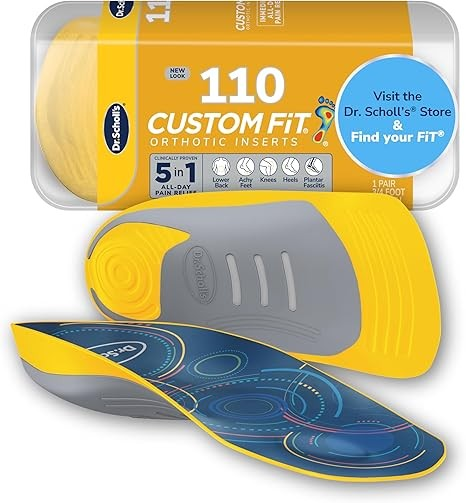
#4- Dr. Scholl's Custom Fit Orthotic Inserts
The “Custom Fit” line from Dr. Scholl’s sounds impressive, but the name oversells it a bit. These are comfortable enough, but they rely on a plastic bottom layer that flexes WAY too much (in our opinion). Also, because they sit on top of your shoe’s insole, they can feel bulky or unstable.
Some listings note they’re not returnable once opened, so check the seller’s current policy before you buy.
Highlights:
-
Widely available in stores, but potentially terrible return policy on Amazon
-
Shorter length may take getting used to and can lead to instability and shifting.
-
Price: ~$50.00
-
90-day warranty
-
Made outside the USA
Verdict: Convenient and easy to find, but limited support and return options for the price.
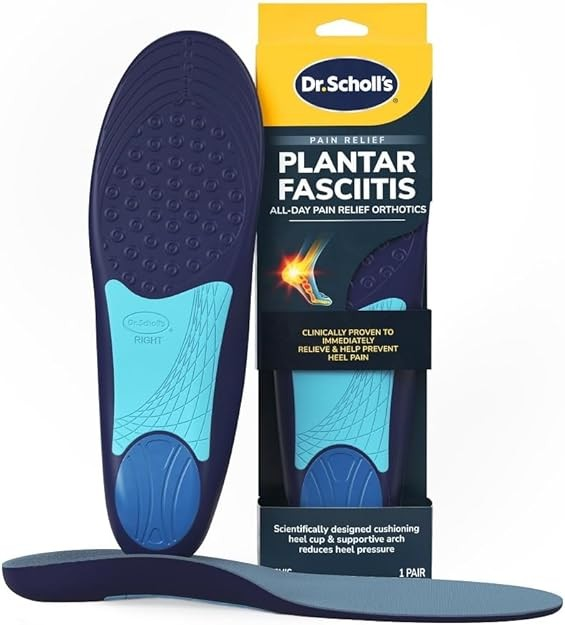
#5- Dr. Scholl's Plantar Fasciitis Orthotics
The most affordable insert on this list, and probably the one you’ve seen at every drugstore.
They’re light and cushiony, but that’s about where the benefits stop.
Highlights:
-
Good short-term comfort, extremely poor long-term support for many
-
Price: ~$15.00
-
Thin design fits most shoes easily
-
90-day warranty
-
Made outside the USA
Verdict: Budget-friendly but ultimately may not have adequate support to relieve or prevent plantar fasciitis for some users.
If You’re Not Ready for Surgery, Start Here
Whether you’re dealing with:
-
A bunion on your big toe
-
Mild to moderate bunion symptoms
-
Collapsing arches or overpronation
-
Or a sense that your bunion is getting worse…
…supporting your feet can help.
👉 Try Samurai Insoles Ninjas - the same insert I designed and recommend to my patients to reduce pain, improve foot mechanics, and support the joint before things get worse.
They’re comfortable, affordable, and designed by a podiatrist who’s seen it all.
“Bunion discomfort is one of the most common things I treat. That dull aching pain or feeling of joint grinding is a textbook sign. When patients get consistent arch support underfoot — not just soft padding — it generally improves outcomes. Sometimes dramatically.”

Best,
Dr. Tom Lembo
We, Samurai Wellness, LLC, are a participant in the Amazon Services LLC Associates Program, an affiliate advertising program designed to provide a means for us to earn fees by linking to Amazon.com and affiliated sites. Samurai Insoles are branded products made by our company, Samurai Wellness, LLC, and we truly believe that our products are the best on the market! This article is a promotion of the Samurai Insoles branded products that we sell. It is important to know that our products are not intended to diagnose, treat, cure, or prevent any disease.